A priestess to the dancefloor, Eris Drew has been mastering the art of vinyl since 1994, preserving the legacy of a true analog experience and embracing dance music as a spiritual exchange. Across her sets, productions, and recent entry to the historic DJ-Kicks series, Drew draws from the energy of early rave culture while remaining deeply attuned to the present moment. Her work is rooted in connection, emphasizing the joy to be found in dance music and experiences that are subjective yet undeniably communal. Speaking to Drew, it is clear that for her raving is far from an escape. Instead it is a space that encourages true liberation – one where mind, body, and music converge. Ahead of a summer of touring and the anticipated return of beloved festival System Activate, Drew breaks down crafting a mix that transcends a single moment, the memories carried by analog media, and why the dancefloor matters now more than ever.
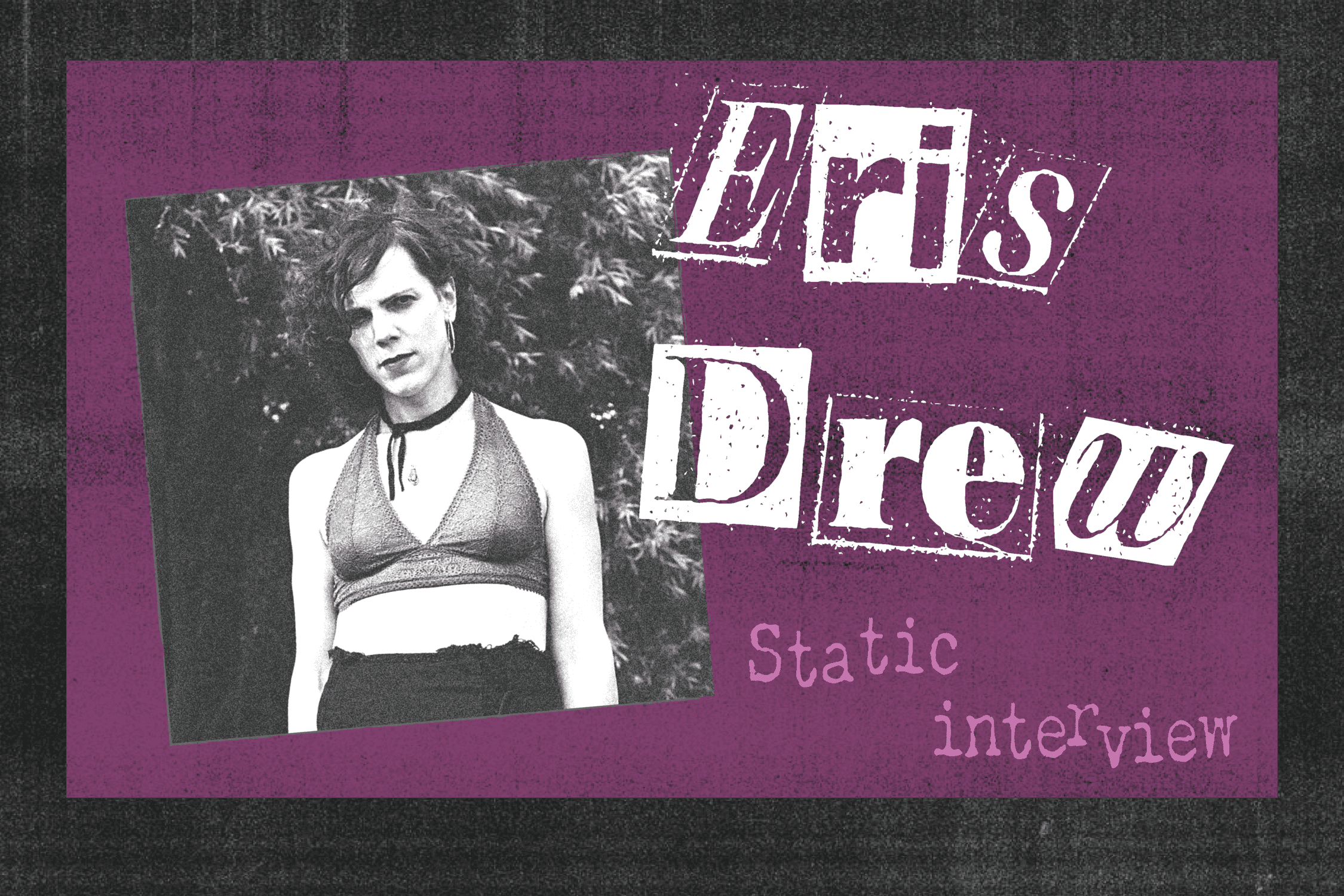
Graphic by Mia Xiao
Your recent DJ-Kicks has been on repeat for me. What was your process of curating and mixing like?
I was honestly really excited when they asked me to do it. Every once in a while, I talk to my closest people, and they’ll be like, “If there’s something you could do, what would it be?” And I just have a short list, and doing the Kicks was on there. When I was a young raver these Kicks left a strong impression of the artist that lasts through time. I have a CD shelf with my DJ-Kicks and Maya’s DJ-Kicks and it cements in some ways who that artist is at that moment, which, of course, is an accumulation of everything that they did before it. I started in 1994 mixing records, so to get to do it after DJing for as long [as I have], I kept thinking of the future. For the selections, I didn’t want them to feel like just my hot tracks at the moment. I really thought about songs that meant a lot to me through time and how they would all fit together to tell a full story about the music I love.
Being a vinyl DJ, do you have a philosophy about analog?
On the simplest most honest human level, I play records because I always have. I spent all that time learning to do it, and having this collection, interacting with these things. The more digital the world becomes, the more precious that connection becomes. It’s almost like a connection to nature. I treasure it.
I wanna say I don’t think it’s better than anything else, I just have a strong personal connection. A lot of people ask whether records sound better? And the honest truth is, it really depends on the piece of music and how good the pressing is and the setup. If shit vibrates really hard on stage it can make the records warble or even skip and there’s so many limitations of vinyls, but also all that chaos and potential comes through it all as energy. So a lot of people seem to really viscerally connect with my record playing and with anyone’s record playing, because of that tactfulness and that kind of tension there.
They’re also really cool just as objects – records carry information and there’s nothing digital there, and it can’t be tracked or traced, or my taste in music can’t be fucking used by Palantir or sold to the security state. I play a lot of 90s stuff, and more and more my peers from that time are not with us anymore, so these discs also have these generational stories in them, which I think also becomes powerful in the context of the dance floor, which has always been about people coming together in generations, and then thinking about who isn’t with us anymore, and then the kind of future we want to have.
You just mentioned this connection that vinyl or music in general brings on the dance floor and carries with us what we’ve lost or things that are no longer with us. How has raving changed throughout your life and what have you carried with you from when you first started DJing?
There’s so many levels. From that time I have this flyer collection from the 90s. I would hand out flyers because it was a way to get discounts into the party or start to meet people and I had this sense that something extraordinary was happening at the end of the 20th century. So I kept them all, that time was really magical. It opened my heart and changed the direction of my life. I didn’t think I was ever going to be a musician. I was a kid who wanted to be an astronaut or something. I actually went to law school and I had a really weird trajectory in life, but raving just those couple years – I felt like I lived a lifetime in a year. I learned a lot about who I was in that time, and it took me decades to try to integrate that knowing into a life that makes some sense now. Rave music really did split me open.
Something that for me feels very special seeing you play is the spiritual recognition of the music. Could you tell me about your philosophy of dance music?
A lot of times when I talk about these rave experiences it’s always in the past tense, but I need to say I think this music still has tremendous potential to bring people together around certain ideas and practices. Subjective experiences are getting in shorter supply. More and more stuff is mediated through digital media. When I was first raving we thought technology was going to be quite liberating, and it’s weird because it was – I don’t know if I would have totally ever understood myself as a trans person if it hadn’t been for the Internet and social media. So I believe in the transformative power of a spiritual culture centered in technology and actual lived experience – which is the dance floor – and making music together too, mixing records at home with your friends, or making tracks, but a real subjective experience.
There’s a lot of cruelty in the world right now. The United States is just using its brute force to cause death and destruction all over and there has to be a better way. There have to be better things to coalesce around than this culture of domination. The strongest challenges in my own life came from really intense dance floor experiences and psychedelic experiences. I think love should be a guiding principle. Music has a lot of power to break us down and put us in a harmonious state with rhythm, and to do that together through this cultural pathway of rave – I think it’s meaning giving. Millions of people have put their creative lives and dreams into this music. So it obviously has a deep cultural core, and means a lot to people.
The present moment being a time so necessary for connection – what motivated you to create System Activate?
I do it with Octo Octa – Maya -, Mx.Blaire, and our friend Faye from Oakland, from Envelope sound system. That’s the core team. The genesis of it came when Maya and I got a custom built sound system and worked on that with Faye over time to get it really sounding good. We would set up in the backyard and test it, and it sounded like the most pure sound I’ve ever heard. We would test it out here, and then bring it in these warehouses or in rooms and all of a sudden you’re dealing with all the reverberating and all the cross talk, and all the things that make a sound system not sound good when you go out sometimes. For us, it’s about the experience of the music and actually getting to stand in front of a speaker and hear the full sound. And you can’t do that at a 10,000 person festival but we sure as hell can do it at a 1000 person rave.
That was a big part of the 90s, these walls of sound and it’s not that people didn’t interact with each other, but we’re always just kind of dancing with the music. At the time, we used the word agender, which I know is a very old word, but I want to be honest about the language at the time because that’s the truth of how I felt about it. It felt like such a safe space. I remember going to socials, a little baby trans girl that doesn’t understand herself, and I hear J.J Fad Supersonic – this big 1987 early kind of 808 bass beat rap song, but it was like everyone’s supposed to dance in genders or pairs. The girls could kind of dance together, and then boys could dance goofy together. And I’m like 12, and there’s already all this shit being sort of imposed through music. So raving was just a liberation, because instead of feeling like I needed to dance a certain way with someone I could just dance with these speakers. I was trying to figure out so much about where I was sort of embedded in the matrix of society being a gender non-conforming person and I was so relieved to just be a body interacting with sound.
Rave music and specifically house music has so much joy and hope
It is hopeful. You’ve got the beautiful deep house songs singing about hope and joy and things like that. But then you also have acid, and that’s house music too, and that’s spiritual, it’s not melody at all. And it’s so weird because in most popular music melody is the thing that draws people into it and what they remember and what they share with their friends. But acid ain’t like that. So house music is both those things, you know? It’s both a sort of choir and it’s also this more of a pulsation based, resonant based kind of music.
I think that movement between this sort of a disembodied spiritual voice, because we don’t associate a performer with these voices usually, is a pretty cool way to experience music. Because being young and trans – especially at that time, I lived in the MTV world – it was always very performative and very much about style and being sexy. And I thought it was cool that at a rave you’re listening to all this music by people you never see or know. I think there’s something special about the way people encounter records that is so different than pop.
On the subject of acid – tell me about your own production and hardware that you might enjoy.
You’re actually in my studio – So I got the Yamaha SY99, which was one of my dream synths when I was young. That’s a Chroma Polaris down there that’s a 1984, it’s styled like the original Tron, kind of analog hybrid mix. It’s my favorite synth, and that one’s been restored. I’ve got a Minimoog, and a bunch of pedals. Maya and I built me a small eurorack 303 with this crazy resonator on it with intense, resonant feedback spikes at very particular frequencies. So I can dial that shit in. It’s all over this album that I just finished.
The heart of my studio, and I guess if you were gonna say one thing would be – I sequence all my tracks on MPC. So I have an MPCX, and then sitting next to my MPCX is MPC 2000 XL, which is from 1998 and then the X is like a big workstation from a few years ago. So because I make sample based music that was a big deal with the kicks, because I couldn’t use any samples. So I had to write everything, I actually play bass guitar and stuff on it, because I wanted to have more than just synthetic textures. That’s part of why I sample so much. But the turntables here patch through everything, and so I can sample directly from here, and I scratch when I’m working. So there’s a real physical element at the end.
What’s it like performing with Maya?
Oh, it’s amazing, you know? And it was kind of wild because we started performing together as we were finally starting to be together, and we were starting to build things together, and so to have that and to be able to take that and put it into these sets at a time when we both felt pretty vulnerable, I don’t know. I just can’t even believe I’ve gotten to experience this with her. I love playing on my own, of course, and I love listening and dancing to her sets, but something special happens when we play.
You might think after playing together for so long that it might change how it feels – and I just wanna say that it doesn’t. You can tell that everyone is feeling together and in a state of celebration and acknowledgment, more than just an escape – but also empowered. It’s this weird thing that happens – there’s a mix that’s so interesting in queer spaces. There’s this aspect of the spiritual which has an aspect of the imaginal, which has an aspect of the sensual that is a huge part of it too.
Motherbeat: there’s something of this idea – it’s all these things and the kind of balance. And I’d always thought those were separate spheres in life, but they are not and that’s what playing music with my Maya has really shown me. That the sensual part of myself was no different than all these things integrated – the spiritual, political, philosophical, musical, romantic, even organizational – how we do everything.