My first show in California was at a house in the middle-of-nowhere: Sacramento CA. I was adorned with a black tight skirt, a black corset top, fishnets, pointy eyeliner, tequila in my blood. The music started playing; I began to whip my purple hair back and forth, off beat but wickedly enjoyable, until I was suddenly jolted by the push of a shoulder against mine. My first ever mosh pit and a life-altering moment. This deep-rooted sense of adrenaline and wanting trickled out of me, and I yearned to be one of those people in the pit. I wanted the freedom that seemed to serenade them as they flailed. The unity of violence.
I’d dissolve into the crowd, like a drop of water. That was what was so enticing about shows: I could become ephemeral. I could bum cigs from strangers and friends, kick them, and then bum another cig. The loudness of the music blurred all unfamiliarity. Shows became my peace.
That was until %$%#^@%$I. The DIY venue of Oakland. The hub of underage fuck-arounders. The second time I went, I left early (someone was sneaking out). Later I found that a girl had been groped at that very same show. The next few weeks, Instagram stories of the people who committed sexual assault ot re-posted like wildfire. It was a haze of faces and names.
“Crowdkill this bitch in the pit! Rapist!” on back to back Instagram stories, cyclically into infinity.
I didn’t stop going to shows. They were fun and wild and filled the hollow of my bones. But, I did become more wary. I tried not to touch shoulders in the pit. Skin became shards of glass to avoid. A moshers’ nightmare. I asked a few girls about the sexual assault accusations going around during sound check. Some said they would probably stop going to shows soon, or that they know people who stopped because they feared for their safety. Others said they’ll bring pepper spray.
Eventually, the stories stopped crowding, faces changed, and it felt as if this serial spread of sexual assault finally withered. But it wasn’t something you could forget. The scent of these accusations lingered at every show, and my rose-tinted glasses un-fogged. I started taking notice of how few femmes I see in the pit, especially at non-DIY venues. I still noticed how many girls put their hands behind their back to shield their ass. I noticed that I started doing it too.
When I came to New York, I assumed I’d feel this same lingering fear. The separation of girl and hardcore.
Nevertheless, when the line up of Bayway, Crown of Thornz, IE band Knuckle Sandwich popped on my feed, I couldn’t resist a ticket. A few weeks before the show, I was walking through Penn Station with my friend as he popped an AirPod in my ear and exclaimed, “Shoot Da 5. They’re playing at Bayway.”
You know that feeling when your feet can’t stop humming to the beat? And you time the steps in tune with the riffs and bump your head and forget where you are? Yeah, that’s Shoot Da 5. “The vocalist is this epic lady,” he said, showing me her Instagram. She had epic tattoos, shaved sides, and the most badass photos ever. I was exhilarated to go to this show.
Openers Faca and Farsight were enjoyable, but the crowd was pretty empty. After them, the venue began to fill up and the early birds got kicked by the worms. There was a fair number of people moshing, but most still stuck to the sides..
And then Shoot Da 5 came on.
Before she was in Shoot Da 5, Shay said that her introduction to harder music started with a British Rock CD found on the sidewalk, that somehow led her to NU metal. She was coy as she said this, asking me if I knew what Korn was with a creeping smile. But to her, hardcore was the genre she connected to most. Her band calls it “hardcore con sazón.” Hardcore that makes you feel.
Her hardcore was con sazón. Her vocals are traditional: loud shouting and yelling, like she’s talking at someone angrily at a bar playing shitty music.. She told me that hardcore is different from other harder genres because she can feel it in her bones. The vocals pulsate through her vertebrae. She moved up and down, her face red and contorted with wrinkles from an open mouth screaming rowdy, energizing lyrics. The instrumentals themself had dirty ass breakdowns: slow, then slower. Heavy then heavier. She took breaks in the song, a mimicked pause which increased the intensity and invigorated me to scream right back at her. I watched the reaction of the crowd as the venue filled and saw the typical smiles of mischief and violence, the head-beaters and the crowdkillers, and those getting ready to punch the fuck out of the air in the pit.
Shay told me that men sometimes don’t know how to act around her because of the way she dresses, and that being a brown woman (person, really) immediately affects the way she is treated.
But the audience? They didn’t give a fuck. She was fucking sick.
Shoot Da 5’s set was unfortunately cut short due to a sound-check , but they set the stage for the rest of the show. Before them, the vibe was tired, listless. Afterwards, the crowd felt rejuvenated, vigorous, and the chaos began. I watched as more women penetrated the crowd. To be honest, I was surprised by the number of musherettes with a serious presence in the pit. Back home in the Bay I only met a handful of female mothers, but at this show endless amounts of girls were raging, going ham in the pit. Most of them moshed, many of them hugged and talked to the bigger, more macho-looking, prototype hardcore dudes, and I realized that the distance I often felt in the Bay Area didn’t seem as pervasive here. We were just people enjoying hardcore together, regardless of identity. That’s what Shay said was one of her favorite things about the hardcore scene. When people got pushed down, they got picked up.
I asked Shay if she thought the hardcore scene needed to open itself up to more identities. She told me that hardcore’s been making room for different kinds of people for a while, with bands like Walls of Jericho paving the way for badass female vocalists back in 89. I realized then I had been looking at the scene in the wrong way. I had wrapped this veil of separation around me because I thought it was theoutcome of sexual assault. The cases formed a distance I dissolved into. Yet, I had also watched as the entire scene banded together to blacklist these people and shun them from future shows. I had watched as the community opened itself up to safety.
The point of hardcore is its ability to open itself up, and it was evident that the only thing I needed to do was walk in. I think of the first question I asked Shay while sandwiched in between the unfunded unused coat-check and the men’s bathroom, our little corner of respite from crashing beats.“Were you ever wary of entering harder-musical scenes as a woman?”
“Not at all, this shit does not phase me.”
And maybe, that’s the crux of it all. We were all there as one, collectively putting our arms out to protect our heads, our earplugs in to jam to the music. Nothing except the music mattered. Despite the gender disparity that does exist, the only further move is people, and femmes, coming out to shows and enjoying the music. The endgame is in the hands of us ladies who decide to show up. Like Shay said, “we all bleed the same blood.”
This interview has been condensed for clarity.
Shay: My name is Shay, I’m the vocalist in Shoot Da 5, and we call ourselves hardcore con sazon. It pretty just means with flavor and seasoning. So we just adapted that to the term hardcore, giving you hardcore that makes you feel.
How long have you been in Shoot Da 5 for, is this your first band?
Shay: I had a band in high school, it was deathcore/techdeath/experimental, but I took a long break because I couldn’t find anyone that wanted to do hardcore or that would be on the same page as me musically. I actually went on Craiglist and my guitarist Zach responded and that was maybe a couple months before COVID. We met up, jammed out with a friend of mine, and that night we wrote “driving while black,” which is one of our hit songs that everyone loves. Then COVID hit and a few years passed until I hit up my guitarist again and said, “Hey do you wanna get this started?” and he said yes. So in 2022 is when the band officially took off, and we had some member changes and I’d say it wasn’t until 23’ that the band became the official Shoot Da 5.
Were you ever wary of entering harder-musical scenes as a woman?
Shay: Not at all, that shit does not phase me.
Do you think people treat you differently in any way?
Shay: Being a brown woman, or even being a brown man, however you identify you’re gonna be treated differently. I’ve been fortunate enough to not really have bad experiences, but you get the looks and you just feel it but it doesn’t bother me whatsoever.
Do you think people react differently to you?
Shay: No, I haven’t gotten anything. I feel like men don’t know how to act around me because I come off as more aggressive, I dress comfortably you know, baggy pants and a fitted hat. I feel like sometimes men don’t know how to take that and they act a little awkward. Other than that, I don’t think I have been treated very differently in the hardcore scene.
What’s your favorite part about the hardcore scene?
Shay: It’s a few things. The first thing I’d like to mention is the brotherhood and the sisterhood, like the tight knight community.
Shay: I would mention the music itself. I feel it in my bones you know? I feel a connection to hardcore and that genre that feels different from other genres in the way I can relate.
How so?
Shay: As far as the life struggle. A lot of hardcore is about personal struggles: friendships, relationships. I mean you have that in music in general, and heavy music, but the way it’s produced and delivered is different. Those are the two main things I appreciate about hardcore.
What’s your least favorite thing about hardcore?
Shay: People who act like their shit don’t stink. They try to be tough. But at the end of the day, like in my song “Come Correct ?” I say “you bleed just like me.” That’s the thing that I hate the most.
Do you think a lot of people act like that?
Shay: No, you got a selective group.
Do you think the hardcore scene, in any way, needs to open itself to other identities?
Shay: I think the hardcore scene has been doing it for a minute. You have MAFA, you have Walls of Jericho. I think that the woman is doing it. I wouldn’t say hardcore needs to open themselves up, but I would love to see more women in general.
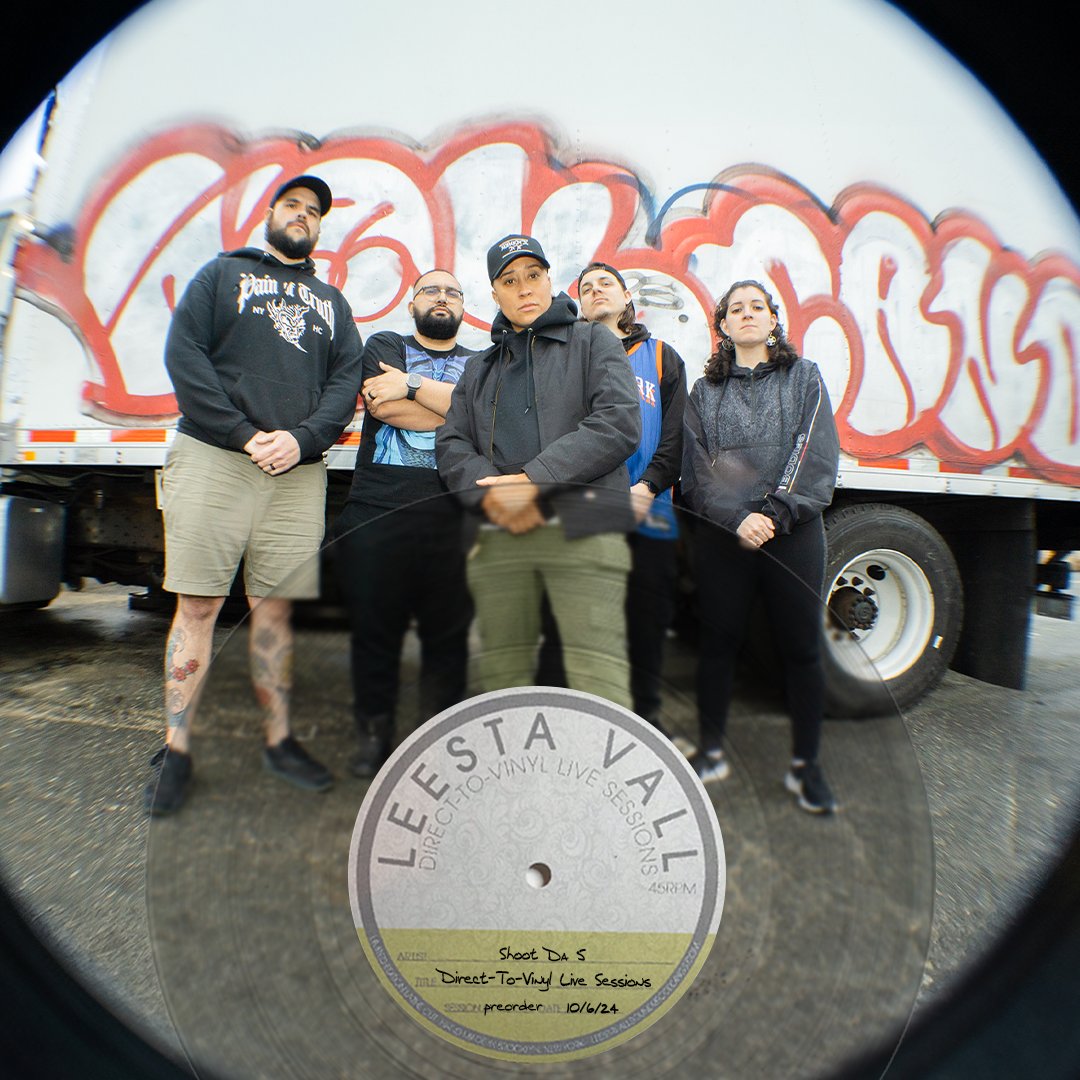
Photo courtesy of Shoot Da 5.