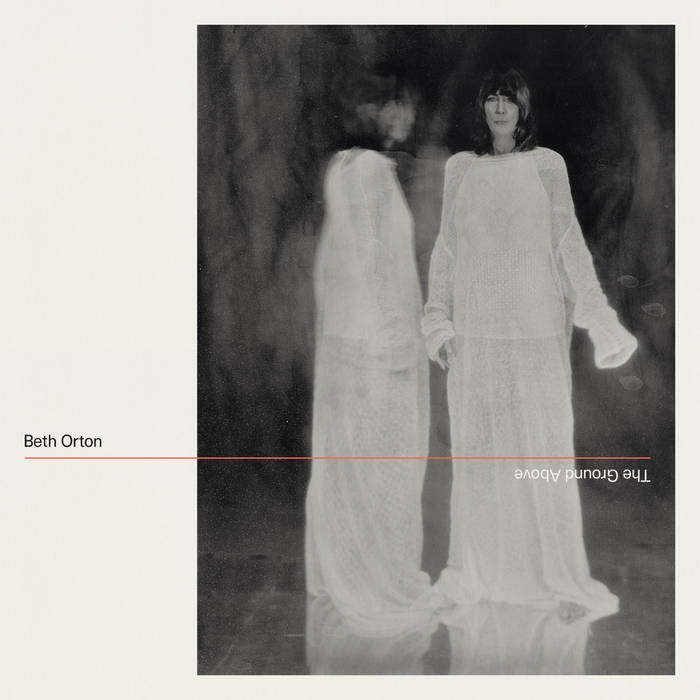
It’s nice when one of your favorite ‘90s vocalizers returns to their era-defining sound with apparent ease. Especially as is the case with Beth Orton’s ninth album The Ground Above, when picking a lane and running with it doesn’t feel tired. Buzzing with the excitement of a youthful release yet mellowed by a mature familiarity, the 8-track record cleanly retraces the great joys and deep melancholies of a life that’s still building on itself. Her second consecutively self-produced record, following 2022’s Weather Alive, nods to the groovy, late night (and early morning) beats she was known for decades ago, but sensibly hints that although the party doesn’t have to end, perhaps it could mellow out.
It’s also nice that we get to hear such wisdom in Orton’s ever-developing timbre, now more fragile than ever. “Remember when I thought it would never change?” sings Orton, her voice nearly breaking, on the title track and achy first single, “The Ground Above.” (Later in the song, she switches back to this line with a new perspective: ‘Remember when I thought that I could change?’) Orton’s lyrics, taking much inspiration from nature, trace circles of life around themselves. She’ll often return to an old thought with fresh eyes, shifting from singing about finding the right time: “To put the best dress back on / To catch a favorite song,” she sings in the intro of the melodramatic and spirited “Waiting,” to “I put the best dress back on / I caught a favorite song” as the track’s slowly built-up crash symbols and rapidly beat drums, played by returning virtuoso Vishal Nayak, crescendo shut.
This happens so often in a track that the temptation to say Orton has grown predictable might surface, then linger; still, the formulaic song structure is also what makes the record so clean. And there’s something to be said about the many times Orton has pulled a career wild card—her earlier, more unpredictable records made sure we knew just how multi-faceted Orton could be. The twanging vocals of pared down, acoustic tracks from 2012’s twanging Sugaring Season, and 2016’s brightly electric Kidsticks with its synthy co-production by Andrew Hung of Fuck Buttons both covered relatively new ground for Orton. Coming off all that, The Ground Above signals Orton is more than capable of taking matters into her own hands, and sticking to what she’s figured out, and it’s pretty great.
That’s not to say Orton’s done it all by herself this time around. As many greats have learned to do before her, she put together a motley crew of legendary session players and focused mostly on live recordings at studios in Los Angeles, New York, and the UK (where Orton heralds from). “The love I felt in the room for them and from them throughout was a rare connection,” Orton said on Instagram as part of the preparation for the album release. Musicians like Weather Alive collaborator Sam Beste (Amy Winehouse’s live pianist!), trumpetist Christos Stylianides and Adrian Utley of Portishead are the iron sharpening the iron of Orton’s jazzy, buzzing soundscapes. The result is a record that’s really a show and tell, a demonstration of some seriously great musicianship. Chalk it up to these virtuosos’ magical ability to sum up their tempestuous influences and ultimately produce something clear-headed, all with Orton in the directors chair.
The result of this collaboration is a 47-minute long record that drifts self-assuredly through a rotating cast of brilliant instrumentation. With a deep, downtempo drone similar to Brain Eno, or perhaps to Boards of Canada’s 1998 forest beats on Music Has The Right To Children, a long-lasting moody ambience will typically start and end a track, like on the spacious, nearly two-minute exit to “Before I Knew.” As the song’s distantly aching keyboard notes and unearthly choral singing all mesh into one lengthy transition, a wildness creeps in along with loneliness like ‘I was speaking to myself again just yesterday,’ spoken quietly in the intro to the eventually pounding, Phil Collins-type ballad ‘Celestial Light.’ It is the multitude of sounds heard even in this one record that reiterate why Orton could never be simply labeled ‘folktronica’ as the ‘90s insisted of the ‘comedown queen.’ Genre-bending to the many scenes she touched, from trip hop and techno to acoustic folk, The Ground Above perfectly exemplifies the beauty of watching and waiting for a sound to solidify.
Amongst all this, it’s worth remembering Orton is coming to us from an undoubtedly hectic period of growth through midlife, a foundation perhaps less solid than it appears. ‘I don’t know, I’m just muddling through. I’m a fucking mess, all right? I’ve become a ‘mother’,’ she told The Guardian in 2022, discussing life with kids, chronic illness, and the multitudes of self-discovery that have come with that. It might be her ability to turn that vague fear of growing and changing into something comprehensible, to organize chaos and make it appear effortless, that keeps conversation on the record along the lines of good, pure reliability rather than anything more insidiously banal. Joyful trumpet bursts escaping through the quivering backtracks of open-air tracks like the nearly 6-minute long ‘I’ll Miss You’ and Orton’s illuminating honesty allow for frank reflections to ring true as she sings, ‘I’d move the stars just to find you / But I can’t live in the dark / So I’m returning to my heart.’ Tremorous amidst the cacophony of burgeoning sound, Orton offers up a disturbed sort of quietude, like a small fence circling a suburban home: possibly isolating, but also the only way through the dark to the warmth inside. True, difficult, and personal, Orton is finding her wondering, wandering way through just the same as the rest of us, and yes, it is nice to hear.