
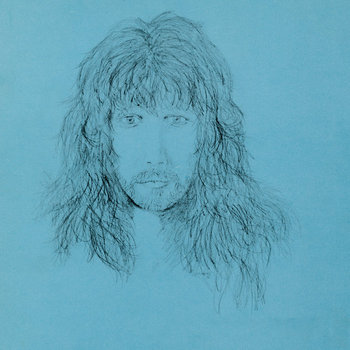
For years, you could hire Robert Lester Folsom to paint your house considerably easier than you could find his record. Music and Dreams, his 1976 privately released debut, was off having a clandestine little career among collectors while its maker remained busy in Jacksonville, Florida, with customers, a family, a few unsold guitars, and a real passion for painting. Then, decades later, the man who’d been known around town for his handiwork found himself with a new, international set of admirers.
Now the album has turned 50, and Anthology Recordings has given it the full anniversary treatment: a remastered edition, ten reel-to-reel demos, and digital covers of “April Suzanne” by Beach House and the title track by Hannah Cohen. But the originals remain the real attraction. Folsom’s songs are tender and slightly lovesick, dressed up with synthesized strings, electric-keyboard solos, and drum fills that give his heartache a little fanfare.
“Thinkin’ of the past and all its dreams,” he sings on “Show Me to the Window,” already sorting through the sentimental bric-a-brac from his early twenties. By then, he had taken his tapes to Nashville, attended college and tried his luck in Auburn with his band, Abacus, a name picked, strictly speaking, for its optimal spot in record-store alphabetization. When engineer Stan Dacus heard the band at Atlanta’s LeFevre Studios, he encouraged Folsom to make a solo album, helping select songs and recruiting local musicians to flesh out the arrangements. The result had southern charm, but wasn’t all porch swing. His homemade recordings have a homespun restlessness. He seems to be looking for the next door out.
That longing settles into its most memorable shape on “April Suzanne.” Folsom’s voice sounds plaintive, but never precious amid the instrumental bustle. “April Suzanne, you linger on my mind and in my broken heart,” he sings, within an endless cycle of her name coupled with sorrow. The arrangement keeps the song in motion, rids the worrying off his shoulders until there she is again, taking up the whole county.
Which is why the Beach House cover is such a fascinating miss. It makes a strong case that the song’s pull comes from Folsom himself. As much as misery loves company, this version should warrant suffering alone. Beach House stretches “April Suzanne” into a repetitive, vaguely cinematic and frankly boring haze that couldn’t soundtrack a League of Legends ad. The repeated name loses its tenderness and becomes another atmospheric effect. Where Folsom’s arrangement keeps his broken heart moving, Beach House leaves it pacing the premises. By enlarging the sorrow and maybe its audience engagement, Beach House loses the sweetness that made the song so good in the first place.
Back on the remastered originals, “My Stove’s on Fire” is a welcomed shift in temperament. Its quicker beat, vocal harmonies, and funk-touched keys suggest that somebody has confiscated the sad man’s address book and asked him to dance. Written partly to protest disco’s encroachment on live music venues during the 70s, the song makes its objection suspiciously boogie-able. Folsom has arrived at the picket line with remarkably loose hips. One might call it an ideological muddle; all I see is a musical success.
The anniversary’s more revealing additions are the demos, whose Bandcamp recording credits trace a route through a college music suite, his friend Sparky’s house in Braxton and a Cook County barn. The credits have the neighborly confidence of directions that include a road sign. On the demo of “Weeping Willow Tree,” an old high-school friend takes the vocal, and the track-list becomes something of a guest book. It’s clear that these songs had company long before they had collectors.
“I was like twenty people in one,” Folsom sings on “A New Way,” briefly accounting for the crowded emotional premises of this album. Its buoyancy feels earned after so much romantic second-guessing. Yet, “Please Don’t Forget Me,” the remastered albums’ last track, complicates any neat story of starting over. He craves a different life without disappearing from the one he has already lived.
Now 71, Folsom is taking those youthful preoccupations considerably further afield. His anniversary tour hit the Bowery Ballroom in October, with London, Manchester, Dublin, and Glasgow on the November itinerary. It’s quite lovely that the songs once passed among friends now require a passport.
Folsom has earned the anniversary fuss. 50 years of Music and Dreams still sounds like a guest pulling a guitar from the corner and asking if you remember this one. It is a golden jubilee celebration we can bask in with the good silver and elbows on the table.