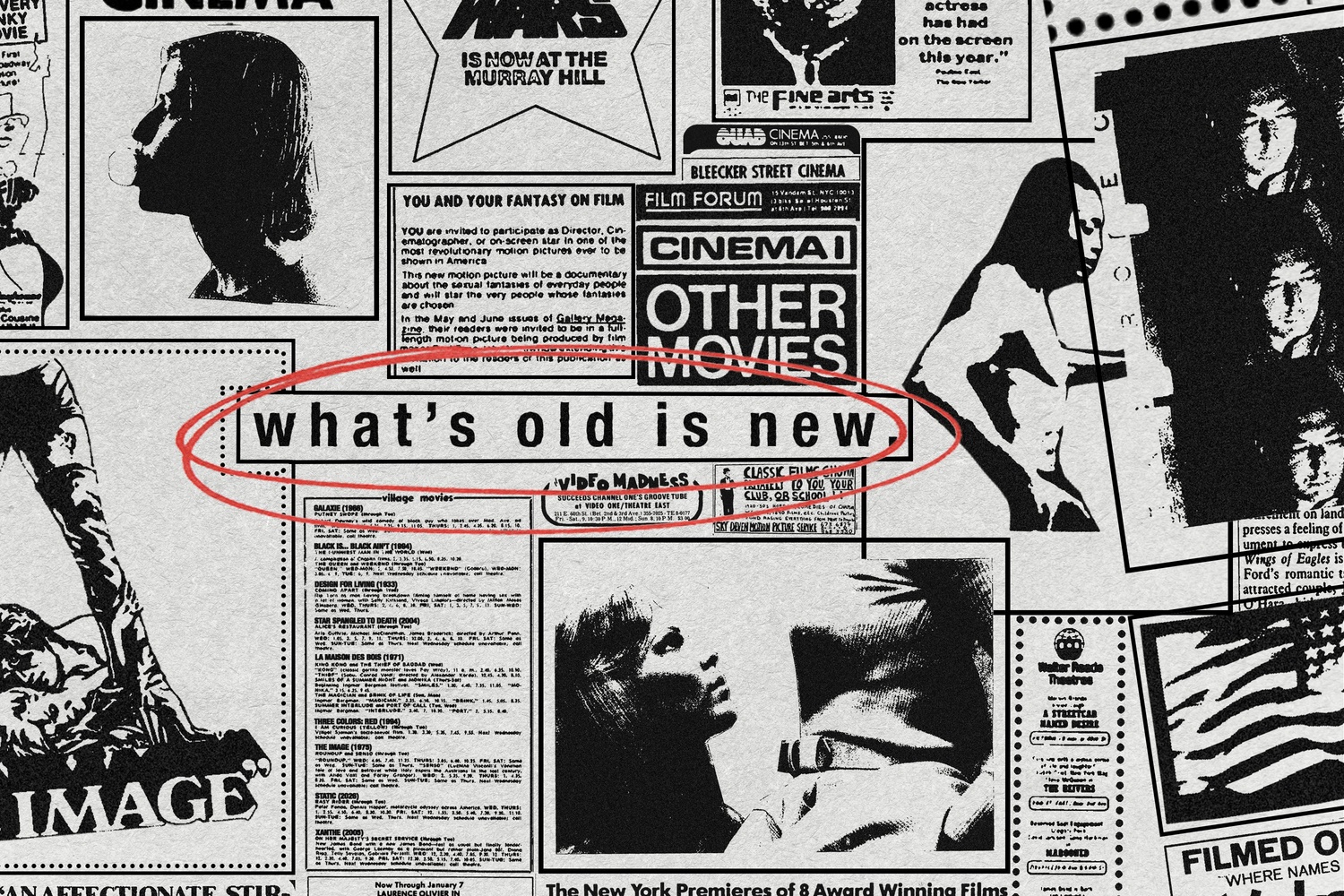
Look through just about any issue of The Village Voice from the 60s and 70s and you’ll inevitably stumble across pages upon pages of film listings and advertisements, ranging from European auteur classics, avant-garde experimentals, and art-house pornography. It was a clear sign of New York City’s newfound position as the world’s preeminent cinema city, with venues like the Bleecker Street Cinema and Anthology Film Archives becoming temples to filmic iconoclasm. Navigating New York’s labyrinthine art-house filmgoing scene became slightly less daunting with the advent of Screen Slate in 2011, which provides comprehensive listings and accompanying criticism for any and all of the city’s niche screenings. Nevertheless, it can still be a massive headache to find the best retrospective screenings within New York’s treasure trove of repertory theaters. So whether it be for a date night at the Metrograph, an educational trip to Anthology Film Archives, or just a quick day at the MoMA, What’s Old is New compiles all the essential programs and screenings to see in the upcoming month.
The Whole Shebang: Ken and Flo Jacobs
Where to see: 14 different theaters incl. MoMA, Anthology Film Archives, and Museum of the Moving Image
With the passing of Ken and Flo Jacobs in December in October and June of last year, New York City lost two of its last remaining links to the mythic iconoclasm of the 1960s avant-garde cinema. A program spanning 14 separate cinemas ranging from the experimental shoebox that is Light Industry to the massive Museum of the Moving Image, The Whole Shebang presents a complete retrospective of the mammoth filmographies of both Ken and Flo (included several never before seen rarities), as well as additional programs of films loved and influenced by the pair. The series’ main draw is a week-long free installation/screening of Ken’s 45 years in the making Star Spangled to Death at MoMA, a seven-hour diatribe against half a century of American history. Other programs of note are Anthology Film Archives’ (who Ken helped found in 1970) nine program retrospective of Ken and Flo’s archival and digital works, long-standing culture critic J. Hoberman’s presentation of eight shorts Ken showed in class when teaching at SUNY Binghamton, and the Museum of the Moving Image’s showcase of 12 shorts inspired by Ken’s Little Stabs at Happiness. The sheer breadth of this celebration is difficult to distill into such a terse format, so check out critic Amy Taubin’s (who is presenting two programs of her own) Screen Slate article which details much more about the showcase.
Tickets: Various
Black Time, Queer Time: Part 2
Where to see: Anthology Film Archives
A continuation of January’s fantastic series of the same name, this second installment of “Black Time, Queer Time” further explores various frontiers of black and LGBTQ+ filmmaking. The series is a kaleidoscopic look at all aspects of film style, history, and temporality across decades of black cinema, deftly shifting between video-essays, avant-garde experimentation, meta-documentary, and feature films to explore the ways in which black filmmaking necessitates the creation of entirely alternative cinematic languages. Highlights of this installment include programs dedicated to jazz, cycles (including Julie Dash’s sensational visual poem Four Women, soundtracked to the Nina Simone song), family, and the series’ thesis statement, a screening of Marlon Riggs’ Black is… Black Ain’t.
Tickets: $14 / $10 for Students
La Fille Des Étoiles: Tina Aumont
Where to see: Anthology Film Archives
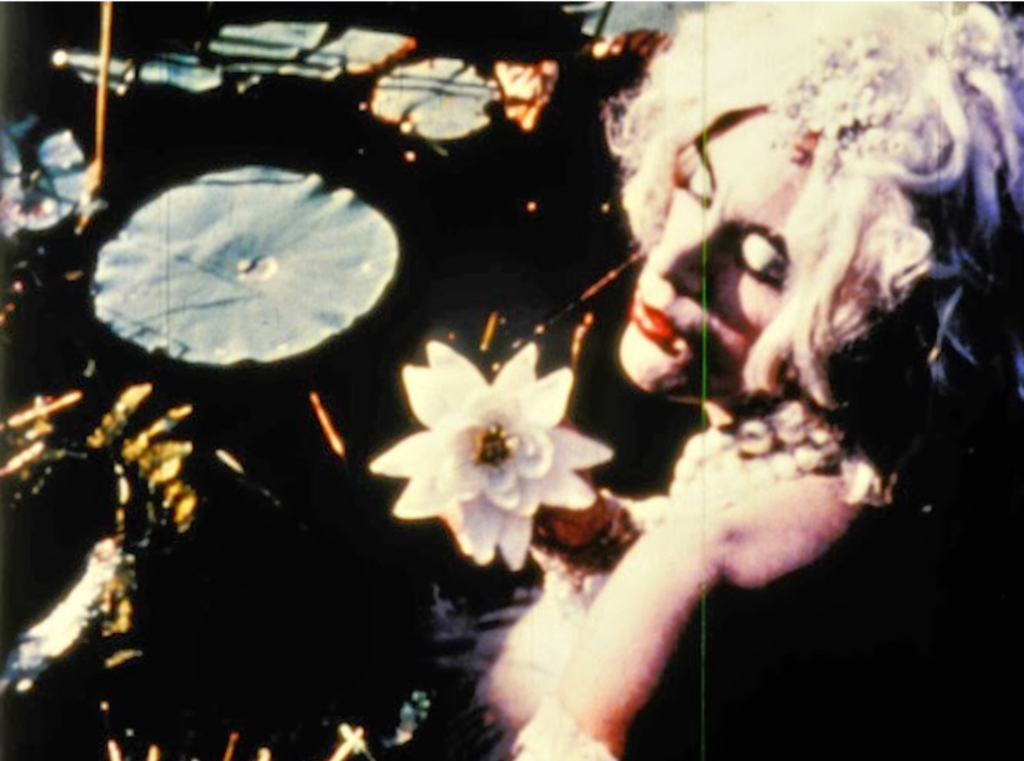
The daughter of camp icon Maria Montez and matinée idol Jean-Pierre Aumont, Tina Aumont’s Hollywood mythos seemed apparent even before her birth in 1946. “La Fille Des Étoiles” pays tribute to the subversive muse to French provocateurs Pierre Clémenti and Philippe Garrel with presentations of Aumont’s films, which range from the salacious to the cerebral (and sometimes both!). Working in Italian cinema for much of her career, Aumont’s fierce work ranged from collaborations with famed eroticist Tinto Brass and giallo master Sergio Martino, which screen in all their B-movie excellence, as well as performances in films by Bernardo Bertolucci and Federico Fellini. In addition to Aumont’s own works are explorations into her mother Maria Montez’s camp mythology, with a double feature of the Montez star vehicle Cobra Woman and Jack Smith’s long unavailable follow-up to Flaming Creatures, Normal Love, whose star Mario Montez borrowed his drag persona from the “Queen of Technicolor”.
Tickets: $14 / $10 for Students
Where to see: Film Forum
Ribald provocation and whip-smart dialogue are married perfectly in the films of Hollywood-via-Berlin maverick Ernst Lubitsch, whose classy comedies represent a high watermark of studio-system filmmaking. 13 of his greatest sound works come to Film Forum this April, many of them on archival 35mm prints. Sophisticated pre-code love triangles courtesy of Design for Living and Trouble in Paradise showcase Lubitsch’s early deftness of form and camera trickery, whilst even his post-code films, which make up the majority of the films in this series, display whiffs of sly disobedience. Most of all, whether it be the gradual loosening of Greta Garbo’s steely persona in Ninotchka or the audacious Nazi hijinks of To Be or Not to Be, Lubitsch’s films are hysterical, and are sure to tickle even the most curmudgeonly of Film Forum patrons.
$17 / $13 for Students
La Maison Des Bois and Three by Maurice Pialat
Where to see: Film at Lincoln Center
From French cinema’s cynical realist comes a new 4K restoration of his long unavailable magnum opus, the seven-part La Maison Des Bois, or The House in the Woods in English. Unlike his subsequent directorial efforts, which explore in emotional starkness the intricacies of petty criminals (Loulou) and dysfunctional relationships (We Won’t Grow Old Together), La Maison Des Bois charts the evolution of a small French village through the spectre of World War II. Described by New Yorker film critic Richard Brody as being “the magma of [Pialat’s] volcanic feature films”, La Maison Des Bois screens alongside his debut feature L’Enfance Nue and the Sandrine Bonnaire starring A Nos Amours.
$20 / $17 for Students
Moral Mazes of Krzysztof Kieślowski
Where to see: Metrograph
On the 30th anniversary of his death comes a (nearly) complete retrospective of Poland’s greatest filmmaker, Krzyzstof Kieślowski. The series evolves from early documentary-inspired works like The Scar to his later elegiac collaborations with composer Zbigniew Preisner and cinematographer Sławomir Idziak. With complete presentations of the Three Colors trilogy and his mammoth television work Dekalog, these spellbinding explorations of grief, fate, vengeance, and voyeurism have cemented Kieślowski as an icon of the European art-house.
$18 / $11 for members
The Erotic Cinema of Radley Metzger: Restorations
Where to see: Metrograph
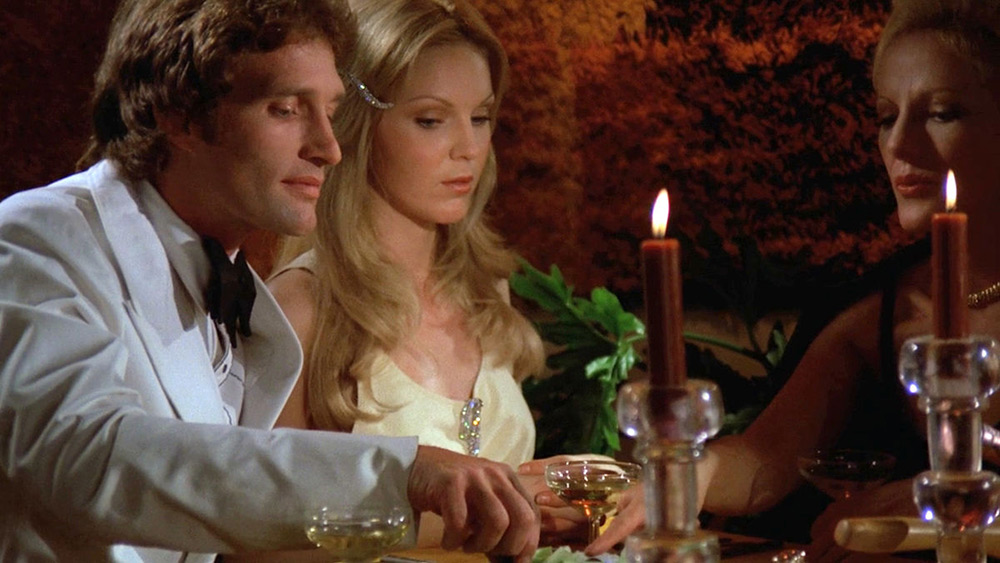
If you’ve been feeling like New York City’s filmgoing scene has lacked a certain racy sleaze recently, look no further than this series of four films by perhaps adult cinema’s preeminent auteur, Radley Metzger. A ravishing display of florid softcore and lavish hardcore smut, this short series spanning two weekends are sure to transport you back to the Golden Age of Porn, the Metrograph transforming into the art nouveau porn palaces that littered the streets of Times Square circa 1975. But it isn’t just pure titillation that the series offers. All four films are introduced by film historians Rob King and Ashley West, whose experience writing various books and hosting porn history podcast The Rialto Report promising an academic engagement with these bawdy films that extends beyond just arousal. So if the prospect of watching hardcore pornography with a Metrograph audience doesn’t automatically horrify you to the point of no return, come along and try not to get too carried away in the process.
$18 / $11 for members
Tahar Cheriaa: Chronicles of a Pan-African Pioneer
Where to see: Metrograph
As the concept of Pan-Africanism came to prominence during the decolonization efforts of the mid 20th century, so did Tunisian film critic Tahar Cheriaa’s desire to create a Pan-African cinema. With the genesis of the Carthage Film Festival in 1966, Cheriaa truly began the facilitation of a truly independent African cinema, one which actively engaged with the ramifications of colonialism and the lingering presence of European influence. Cheriaa’s collaborators read like a who’s who of Africa’s greatest directors; Sarah Maldoror, Ousmane Sembéne, Djibril Diop Mambéty, and Med Hondo all posited the potential of this new African cinema. Introductions and Q&A’s with experts at almost every screening encourages critical engagement with these fantastic films, but you can still just as well lose yourself in the exuberant escapism of Mambéty’s Touki Bouki.
$18 / $11 for members
A Hard State: Peter Hujar, Paul Thek, and their Circle on Film
Where to see: MoMA
The lives of two of New York City’s most important photographers are explored in this short series, which presents footage by and of Peter Hujar and Paul Thek, alongside filmic works by contemporary luminaries Gregory Markopoulos and Susan Sontag. In celebration of the dual biography The Wonderful World That Almost Was: A Life of Peter Hujar and Paul Thek by Andrew Durbin, who will speak after every screening, this program provides a queer lens with which to view the staggering concentration of artistic eccentricity that was the 1960s avant-garde. Wonder no more about if Ben Whishaw’s portrayal of Peter Hujar was faithful or not by catching the extremely obscure Salters Cottages, which features the most extensive moving documentation of Hujar in existence. Other highlights include a screening of Sontag’s film Duet for Cannibals (with her biographer Benjamin Moser in conversation post-screening) and Markopoulos’s yet undigitized Galaxie on 16mm.
$14 / $12 for Students / Free for Students via Rush at box office
One-Offs
Here are several interesting events that I couldn’t quite fit into their own series sections, but nevertheless are still really worth checking out:
- The Film-Makers’ Cooperative is presenting a screening of various rare late 1970s Stan Brakhage films, which have never been digitized.
- The Museum of the Moving Image, in a similar vein, is showing a special screening dubbed “Earthly Delights: Historic Psychedelia, Animation, and Avant-Garde Films in Large Format”, which displays unorthodox methods of deconstructing the materiality of film itself.
- Japan Society is reviving its John and Miyoko Davey Classics series with a screening of Suzaki Paradise: Red Light by Yuko Kawashima, a dour post-war working class story in the vein of Kenji Mizoguchi’s masterworks.
Graphic by Xanthe Massey