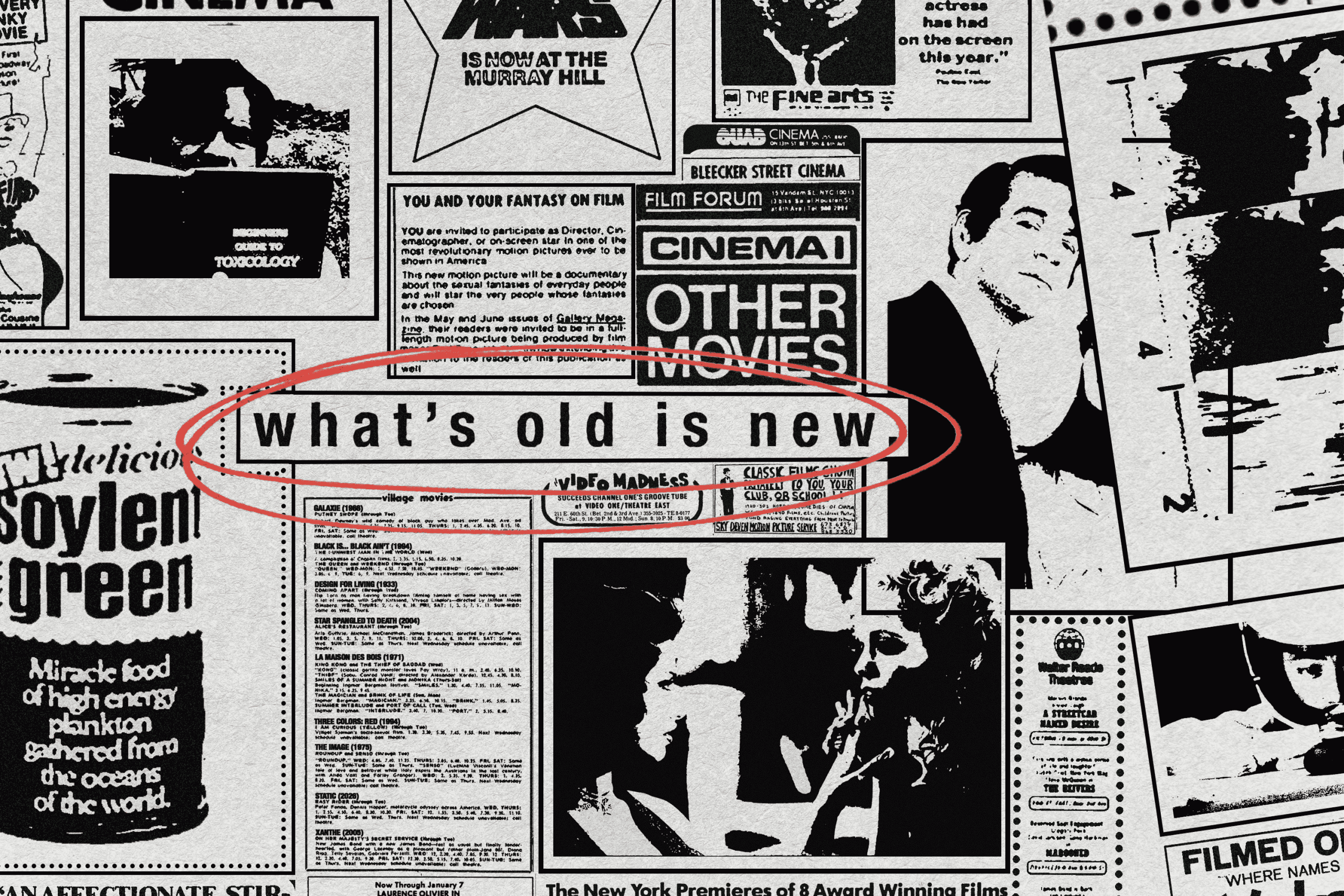
Look through just about any issue of The Village Voice from the 60s and 70s and you’ll inevitably stumble across pages upon pages of film listings and advertisements, ranging from European auteur classics, avant-garde experimentals, and art-house pornography. It was a clear sign of New York City’s newfound position as the world’s preeminent cinema city, with venues like the Bleecker Street Cinema and Anthology Film Archives becoming temples to filmic iconoclasm. Navigating New York’s labyrinthine art-house filmgoing scene became slightly less daunting with the advent of Screen Slate in 2011, which provides comprehensive listings and accompanying criticism for any and all of the city’s niche screenings. Nevertheless, it can still be a massive headache to find the best retrospective screenings within New York’s treasure trove of repertory theaters. So whether it be for a date night at the Metrograph, an educational trip to Anthology Film Archives, or just a quick day at the MoMA, What’s Old is New compiles all the essential programs and screenings to see in the upcoming month.
Graphic by Xanthe Massey
Where to See: Brooklyn Academy of Music
A kaleidoscopic exploration of perhaps America’s greatest novelist, this series celebrates the cinematic inspirations and influences of Thomas Pynchon, past and present. Consisting of films rooted in Pynchon’s signature preoccupations of conspiracy, counterculture, and silly names, the the wide-spanning influence of his novels are apparent in works ranging from New Left comedies like The Big Lebowski to the paranoid plots of Jacques Rivette’s Paris Belongs to Us and Le Pont Du Nord. Absurdism and alienation are also present not only in Paul Thomas Anderson’s two cinematic adaptations of his work (Inherent Vice, One Battle After Another), but also in the over-the-top satires Southland Tales and Dr. Strangelove.
$17
Korean Cinema’s Celluloid Fever: 1970s
Where to See: Film at Lincoln Center
Continuing in the vein of MoMA’s series “Seoul After Dark: Memories of Korean Cinema”, which paired the violent noir of the country’s new wave of cinema in the 2000s with a long lineage of less-known crime films from the 20th century, “Korean Cinema’s Celluloid Fever” presents the best of the country’s 70s output in vibrant color. With films ranging from pulpy action, erotic horror, sordid melodrama, and even sci-fi animation with the tae-kwon-do adventure Maruchi Arachi, the series highlights a period of Korean cinema barely recognized outside of the peninsula. Additionally, most screenings are premieres of brand-new 2K and 4K restorations.
$20 / $17 for Students
Where to See: Film Forum
Meaning “Fleischer father and son” when translated from French, “Fleischer père et fils” views almost five decades of American cinema through the works of master animator Max Fleischer and his son, director Richard Fleischer. The program presents over 60 of Max’s most iconic cartoons, including ones of such iconic characters as Koko the Clown, Betty Boop, and Popeye. Meanwhile, the retrospective of Richard’s works spans a myriad of different styles and cinematic periods, ranging from the Golden Age noir of 1949’s Trapped to 1973’s New Hollywood dystopia Soylent Green.
$17 / $11 for Members
Modern Romance: Renegade Rom-Coms
Where to See: IFC Center
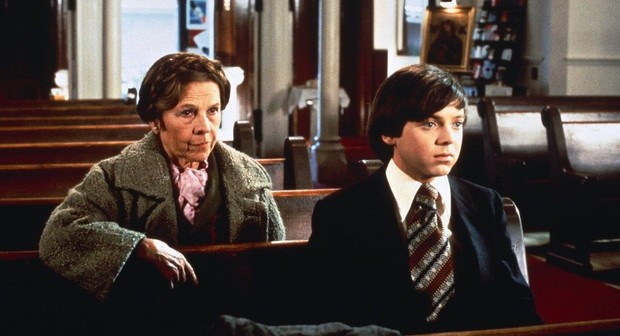
“It never lasts, this is no, there is no, modern romance”, so Karen O sang in 2003. Much like the titular Yeah Yeah Yeahs song, this IFC series showcases a litany of frenetic flirtations and fucked-up flings. Presented in preparation for the release of a new 4K restoration of Elaine May’s mordantly funny masterpiece A New Leaf, the series doesn’t lack in curious new Hollywood relationships with screenings of Harold and Maude and The Graduate. Maybe age gap summer is upon us. Other highlights include the machine-gun war of the sexes Bringing Up Baby and Albert Brooks’ acerbic Modern Romance.
$18 / $12 for Members
Kazuhiko Hasegawa’s Anarchic Ethos
Where to See: Japan Society
The late Kazuhiko Hasegawa, who passed away this January, may have tragically only directed two films in his lifetime, yet his influence looms large on multiple generations of Japanese cinema. Best known for his cult 1979 film The Man Who Stole the Sun, about a rogue high school science teacher who attempts to build an atomic bomb in his apartment, Hasegawa’s intensely iconoclastic ethos also extended to his work as a screenwriter for Nikkatsu’s Roman Pornos, as well as his independent studio Direkan, which helped nurture such filmmakers as Shinji Somai and Kiyoshi Kurosawa. His two directorial efforts screen on ultra-rare imported film prints, whilst two of his Roman Pornos (Bitterness of Youth, Retreat Through the Wet Wasteland) also screen in all their raunchy, social-realist splendor.
$16 / $14 for Students
Wallace Shawn: The Master Builder
Where to See: Metrograph
Organized by close collaborators Lucas Kane and John Early, who both worked on Shawn’s newest sensation What We Did Before Our Moth Days, “Wallace Shawn: The Master Builder” celebrates the synthesis of the master playwright’s filmic and theatrical sensibilities. Whilst there are several screenings which demonstrate Shawn’s deftness as character actor (Clueless, Southland Tales), the series primarily explores cinematic depictions of Shawn’s love for the stage. Screenings of his two Louis Malle collaborations My Dinner With Andre and Vanya on 42nd Street as well as film adaptations of his plays Marie and Bruce and The Designated Mourner display his boundless versatility. Shawn will appear in person at several screenings in addition to the aforementioned Kane and Early, director Theda Hammel, and longtime collaborator Andre Gregory.
$18 / $11 for Members
Thrust It!: The Films that Inspired Maddie’s Secret
Where to See: Metrograph
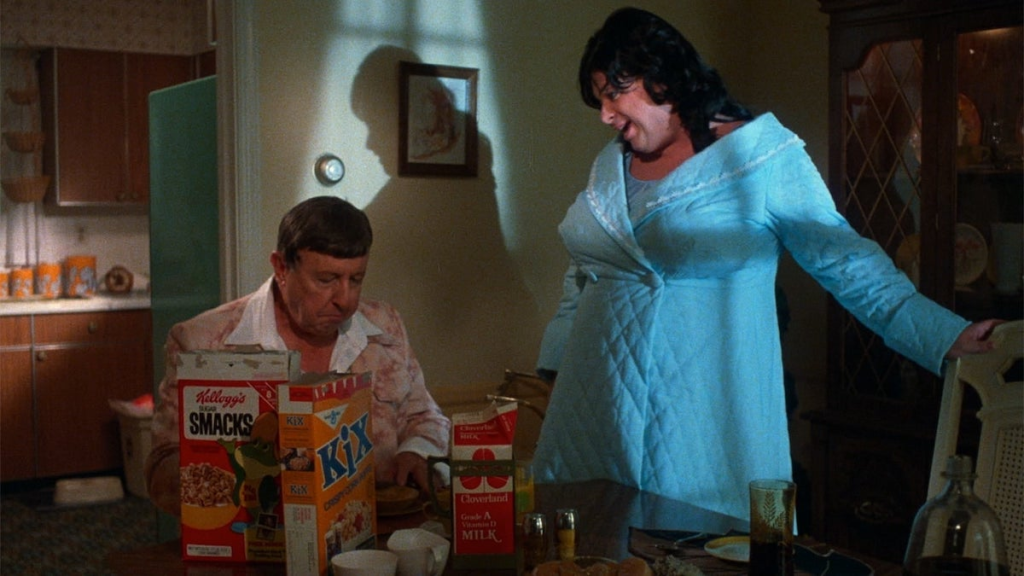
It’s a John Early double header as he presents his own series of films that inspired his upcoming debut feature, Maddie’s Secret. Starring Early himself in drag as a bulimic food influencer, Maddie’s Secret is an homage to decades of cinematic excess, be it the melodramatic grande dame at the center of John Waters’ Polyester or the “careening expressiveness” of Paul Verhoeven’s long misunderstood Showgirls. The series also includes the moralistic made-for-TV Death of a Cheerleader and Adrian Lyne’s equally tawdry and resplendent Flashdance. Early will appear in person to introduce all screenings.
$18 / $11 for Members
Teo Hernández: A Pomegranate Orchard and a Bitter Well
Where to See: MoMA
The first ever monographic retrospective of Teo Hernández in the United States, “A Pomegranate Orchard and a Bitter Well” presents 19 of the Mexican avant-garde filmmaker’s works. Composed primarily of the experimental queer films he made after moving to Paris in 1975, Hernandez’s work explores the abstract ineffability of nature, the body, and the cosmos. Much like his closest American avant-garde equivalent Gregory Markopoulos, many of his films explore a transcendent mythos, often rooted in radiant queer iconography and bodies.
$14 / $12 for Students / Free for Students via Rush at box office