Look through just about any issue of The Village Voice from the 60s and 70s and you’ll inevitably stumble across pages upon pages of film listings and advertisements, ranging from European auteur classics, avant-garde experimentals, and art-house pornography. It was a clear sign of New York City’s newfound position as the world’s preeminent cinema city, with venues like the Bleecker Street Cinema and Anthology Film Archives becoming temples to filmic iconoclasm. Navigating New York’s labyrinthine art-house filmgoing scene became slightly less daunting with the advent of Screen Slate in 2011, which provides comprehensive listings and accompanying criticism for any and all of the city’s niche screenings. Nevertheless, it can still be a massive headache to find the best retrospective screenings within New York’s treasure trove of repertory theaters. So whether it be for a date night at the Metrograph, an educational trip to Anthology Film Archives, or just a quick day at the MoMA, What’s Old is New compiles all the essential programs and screenings to see in the upcoming month.
Graphic by Xanthe Massey
Don’t Play With Fire: The Films of Tsui Hark
Where to See: Metrograph
Named after the alternate title for Tsui Hark’s 1980 film Dangerous Encounters of the First Kind, this series pays homage to the maverick Hong Kong director’s varied filmography. Described as the “Spielberg of Asia”, Tsui was similarly adventurous and versatile, with work ranging from grimy thrillers, gun-filled action, and even slapstick screwball. Highlights include the nihilistic Don’t Play With Fire, Tsui’s tributes to wuxia action Zu: Warriors from the Magic Mountain and A Better Tomorrow III, and the vibrant screwballs Peking Opera Blues and Shanghai Blues.
$18
Where to See: Metrograph
The cinema of East Asia continues to receive a spotlight at Metrograph with a series on the vast filmmaking output of Taiwan. Centered around the nation’s “New Wave” of the 1980s and 90s, spearheaded by internationally renowned auteurs such as Edward Yang, Hou Hsiao Hsien, and Tsai Ming Liang, “Histories of Home” puts those films in conversation with lesser known works before and after as to understand Taiwan’s relationship to modernization and migration. The national consolidation of the 1960s and 70s is depicted in both films of the time like Hsin Chi’s Hokkien film The Rice Dumpling Vendors and Edward Yang’s retrospective coming-of-age epic A Brighter Summer Day. Meanwhile, the continuous pursuit of modernization and changing of national identity are traced through films like Yang’s Yi Yi, Tsai Ming Liang’s Rebels of the Neon God, and Hou Hsiao Hsien’s Daughter of the Nile.
$18
Where to See: Metrograph
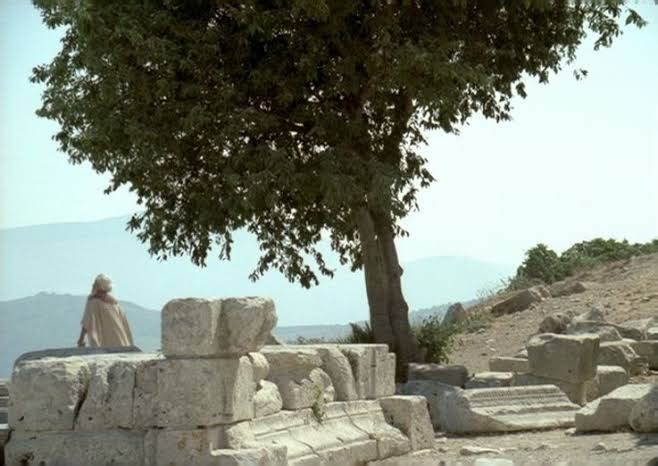
It is an intrepid task as a filmmaker to take on the vast depths of Greek mythology, yet some of cinema’s greatest works have been based on these immortal tales. Many maintain the setting of Ancient Greece; Italian sword-and-sandal epics like Hercules in the Haunted World and the dazzling Harryhausen stop-motion of Jason and the Argonauts embody the adventurous side of the hero’s journey, whilst experimental pieces like Pier Paolo Pasolini’s Oedipus Rex, Straub-Huillet’s Antigone, and Franco Piavoli’s Nostos: The Return abstract centerpieces of Greek tragedy. Even more varied are the countless reinterpretations and reimaginings of Greek mythology in different periods and locations. Black Orpheus brings the Orphic tragedy to Rio de Janeiro during Carnaval. Oldboy turns Oedipus Rex into a gory revenge thriller. The Illiac Passion sees Gregory Markopoulos turn the 1960s New York underground into mythological figures. These films prove that these stories are just as immortal as the Gods they depict.
$18
Yuen Woo-ping: The Number One Martial Arts Director Under the Sky
Where to See: MoMA
It’s a huge month for Sinophone cinema of all kinds in New York, as MoMA celebrates the life and work of film’s greatest martial arts director, Yuen Woo-ping. Starting in the 1970s as a director with martial arts collaborations with Jackie Chan and Sammo Hung, Yuen developed a reputation as one of Hong Kong’s most esteemed action directors. Yuen later brought his penchant for martial arts wirework to Hollywood with the The Matrix and the Kill Bill films. These blockbusters screen alongside directorial highlights like Drunken Master and Iron Monkey, as well as collaborations with Tsui Hark and Ang Lee. Yuen and Lee will be present for a post-screening Q&A for Crouching Tiger, Hidden Dragon.
$14 / $12 for students / Free for Students via Rush at the box office
Where to See: Brooklyn Academy of Music
Cats have been a fixture of global art for over 9,500 years, and cinema has been no exception. “Fantastical Felines” not only brings together some of cinema’s most memorable cats, but also investigates the magical mysticism that surrounds cats in culture. The feline theme of Jacques Tourner’s Cat People represents the then unspoken taboo of sexual desire, whilst the magical, sunglassed cat of Czech new wave film The Cassandra Cat is able to see the true nature of humans through its unique visual apparatus. Meanwhile, the cats of The Black Cat, The Cat Creeps, and Kuroneko are sinister and supernatural in equal measure.
$17
Rubble on Screen: The Cinema of Demolition and Destruction
Where to See: Anthology Film Archives
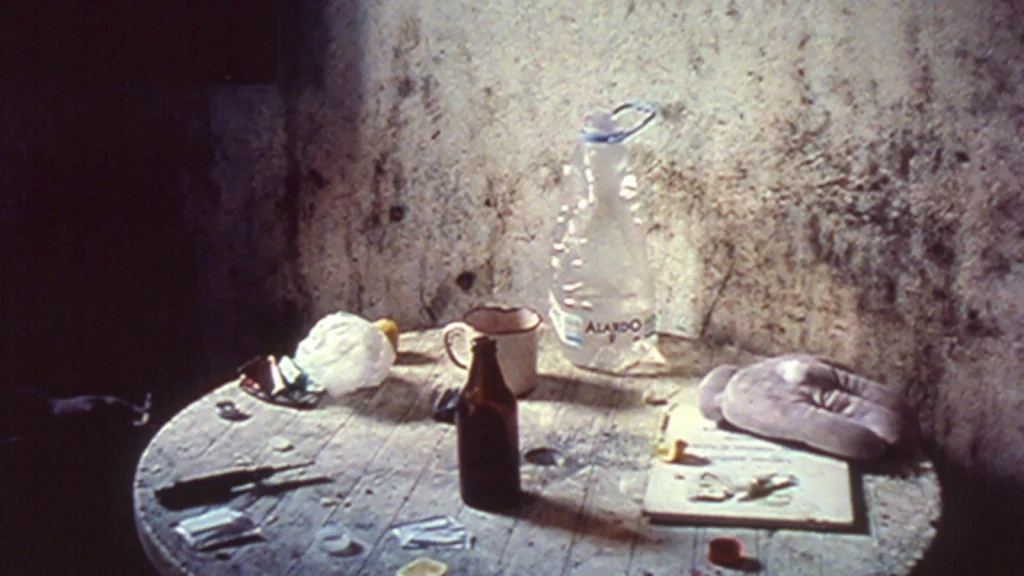
“Destruction is one of our few growth industries”, so Guy Maddin ironically said about the eponymous city in his 2007 docu-fiction My Winnipeg to a dynamite demolition of an iconic hockey arena. Film as a medium is specifically equipped with the ability to capture destruction, from the shock of the act itself to the scattered rubble of the fallout. This series gathers filmic depictions of demolition ranging from the violent settler destruction of Palestinian homes in No Other Land to the slow erasure of a Lisbon slum in In Vanda’s Room. “Rubble on Screen” attempts to think about destruction in relation to war, urban renewal, time, and truth. These filmmakers, in line with Andre Bazin’s theory of the photographic image, embalm these structures of the past forever onto the moving picture just as they become gone forever.
$14 / $10 for Students
Gripped by Hysteria: Ishmel Bernal x3
Where to See: Spectacle
One of the greatest filmmakers in Filipino cinema, the radical work of Ishmael Bernal has received few screenings abroad as compared to contemporaries like Lino Brocka and Mike de Leon. Deemed an influence by current Filipino filmmakers Lav Diaz and Raya Martin, Ishmael Bernal’s films were bitter melodramas that criticized the nation’s mass hysteria and the brutality of the Marcos regime. An openly gay filmmaker, Bernal often centered women in his films in order to interrogate the cultural sickness that characterized Filipino society, most powerfully felt in his most acclaimed work, Himala.
$5
One Offs
Here are some special screenings that are very much worth checking out!
UnionDocs, a non-profit center for documentary art, is presenting a screening of Frederick Wiseman’s 1975 documentary Welfare at Anthology Film Archives, which depicts the intensely complex situation of welfare in the United States.
LGBTQ+ film festival MIX NYC is presenting a series of screenings under the name “Early Interiority: Vintage Trans Cinema” also at Anthology Film Archives, which feature documents of trans women between 1967-1982.
The Film-Makers Cooperative is hosting a rare screening of Stan Brakhage’s series “(…) [a.k.a. ELLIPSES]”, a statement of anger following his bladder cancer surgery and one of his greatest 1990s works.