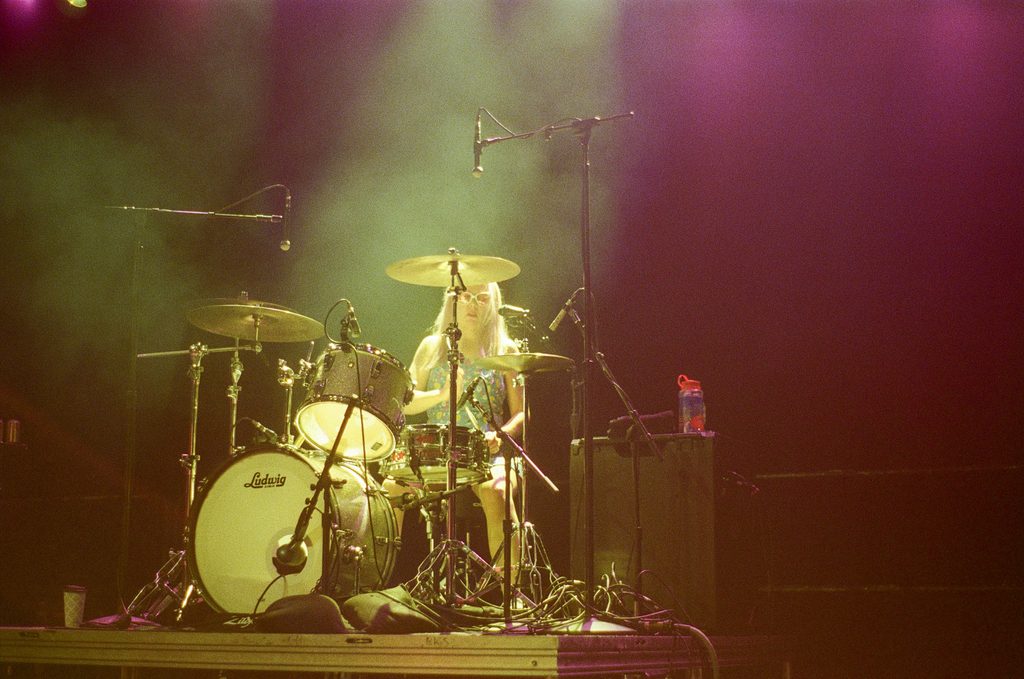
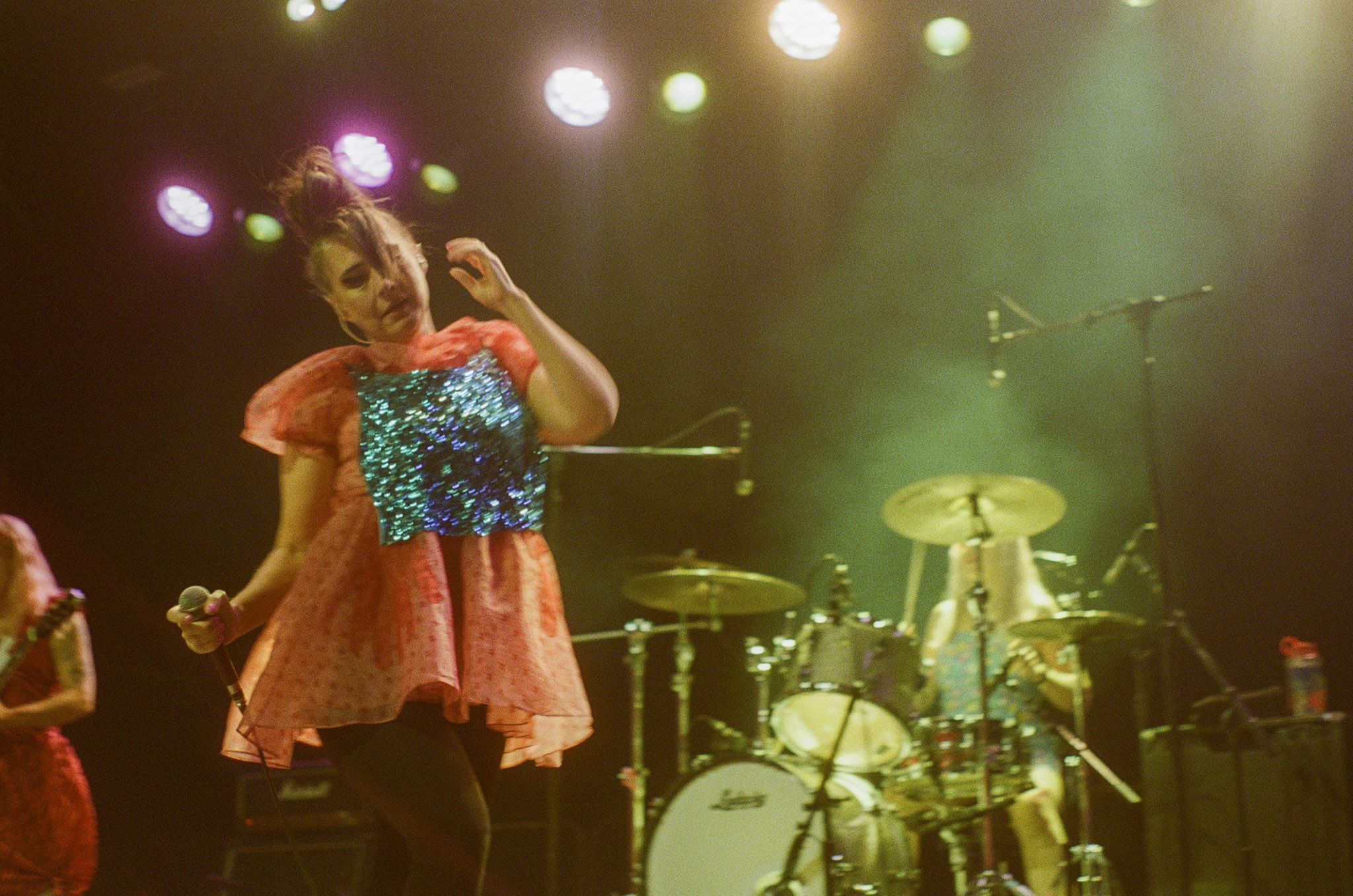
Just thirty-six years ago, men of the music industry and liberal feminsts alike were, quite literally, rocked by Bikini Kill and their dares to fuck, love, cut-and-paste, care, scream, dance. All that said, the four-piece, now in their fifties, are inevitably not the same young and punkish feminists they once were, and the tradition of punk is of course also not the same (“real” punk shows will never be played at Brooklyn Steel, probably).
“Dare ya to do what you want/dare you to be what you will,” frontwoman Kathleen Hanna shouted, with all the same fervor, if not more, a few Friday nights ago at Brooklyn Steel, what ended up being the band’s last stop on their 2026 North American tour. The room was blasting when the four-piece played “Rebel Girl,” “Carnival,” and, especially at the encore, when the band played what everyone was yelling for: “Suck My Left One.” Hanna and her bandmates looked as chic as ever with their bright pink dresses, tattoos, undone pony-tailed hair, and patterns galore.
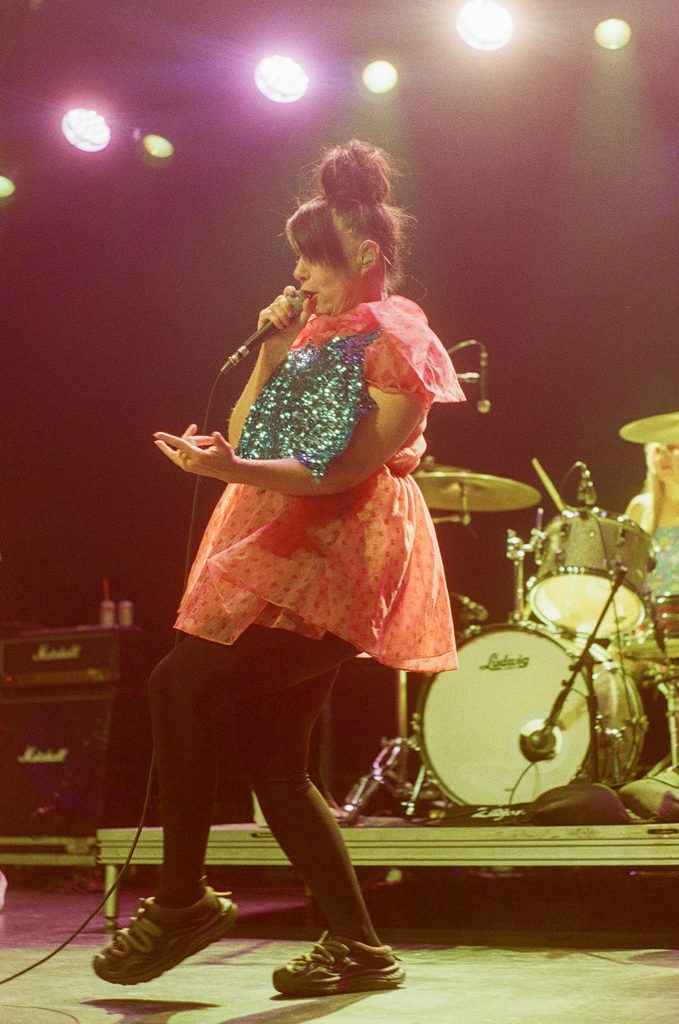
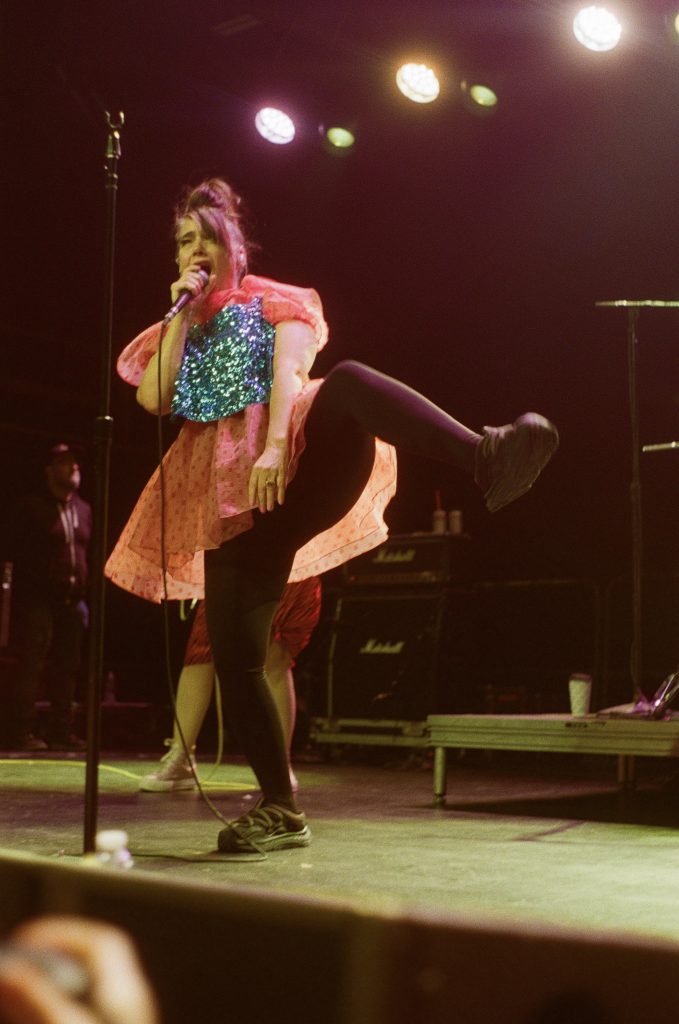
Of course we’re living in a much different world than when the riot grrrl bands of the ‘90s brought to the maleish guitar-world a raunchy and loud feminism. I discovered Bikini Kill in my teenage years, when an untrammeled anger towards men and a desire for women-exclusive music spaces felt like one of the more pressing things in life. (It still does.) There aren’t that many groups providing a similar space or serving a similar function in 2026, at least bands that don’t forgo making actually good music in tandem to a kind of safe feminist space.
“Girls to the front,” was barely spoken nor screamed, and not necessarily for the sake of being more inclusive towards non-cis people; there just wasn’t the same air of grungy hostility and urgency that warrants a chanting kind of night, where sweaty bodies rub up against each other and you inevitably discover too much about some stranger’s fuckboy ex. But instead, most of us stood around and moved our heads haphazardly. There was some dancing, but it was all too respectful. Hanna joked that the age gap in the crowd represented either her middle-aged friends, or girls who she could be the mother of.
So both the world and Bikini Kill are different; shocking. Perhaps it’s so stark in part because punk and feminism are words that now seem tired, numb, and void. Music scenes, though not entirely a thing of the past, are largely online and fabricated; the feminist movement feels flat and terribly vague.
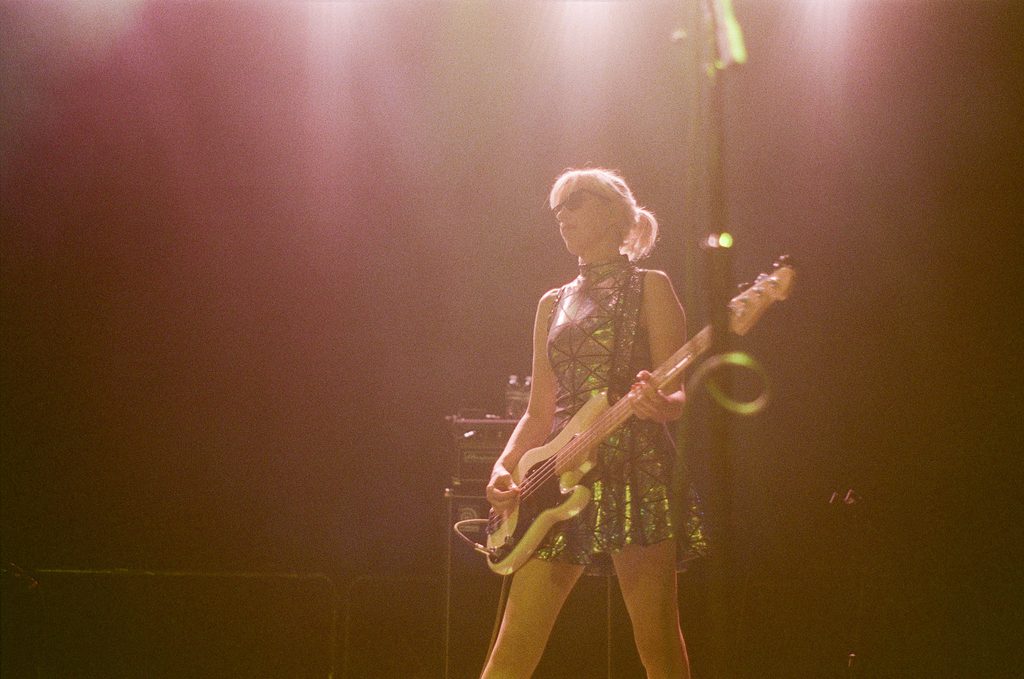
But, still, something about there being a crowd of that size showing out for a band that had its golden age 30 years ago doesn’t seem totally unimportant, nevermind the fact of them being genre heroes. And though removed from their idealized time and context, seeing Bikini Kill live still could’ve been a perfect moment if you were anything like me, us non-men who grew up making our own books, cutting and pasting and stapling paper together, writing songs with just two open chords on the guitar, and threatening to beat the boys up in the middle school gym. A few lines from Hanna’s Riot Grrrl Manifesto circulate in my brain to this day:
“BECAUSE we don’t wanna assimilate to someone else’s (boy) standards of what is or isn’t.“
“BECAUSE we are unwilling to falter under claims that we are reactionary “reverse sexists” AND NOT THE TRUEPUNKROCKSOULCRUSADERS THAT WE KNOW we really are.”
At the end of the show, Hanna began to cry into the microphone, awestruck by the size of the crowd—especially all the young people who weren’t alive when the band debuted, but nonetheless still found their way to her music. I suppose she was unaware of her effect, of her band’s effect. Those of us in the crowd, though, weren’t at all.