If the marriage of music and movie is a science, the perfect placement of a needle drop is just as hard as splitting an atom. A needle drop—most often considered to be the use of a pre-existing song in a movie or show—can either elevate or cheapen a piece of work, making it corny or incredible based on one seemingly minor choice. One of the best needle drops in any movie, the “Rhythm of the Night” scene in Beau Travail, is a big part of why the film is so enduring, whereas the tacky songs in 2016’s Suicide Squad basically put Zack Snyder in director jail.
How, then, are directors of today going about it? If you’re wondering, you’re in luck: intrepid STATIC writers scanned the last five years of films with a magnifying glass and a notepad, all for your entertainment. Not to spoil too much, but the secret to a perfect needle drop might be a well-timed New Order track, or maybe just being Paul Thomas Anderson. For more of our insights, keep on reading below.
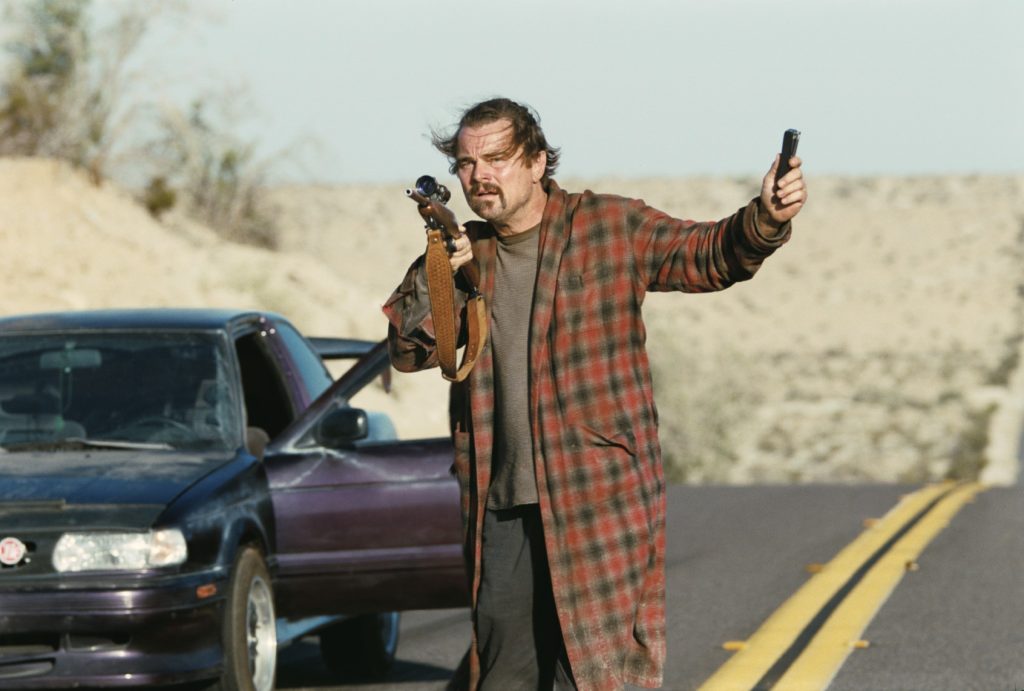
One Battle After Another (2025, dir. Paul Thomas Anderson) – Mo Bamba by Sheck Wes
One Battle After Another is a film of the moment. A loose adaptation of a Thomas Pynchon novel about 60s ex-revolutionaries, PTA sets his story today, showing modern resistance against authoritarianism. The depictions of migrant safe havens, white nationalist meetings, and state enacted violence against protesters are so prescient it’s hard to believe a major studio released this thing. No less of the moment is the film’s soundtrack. 2025’s most shocking needle drop is from OBAA’s high school dance scene. The DJ is, of course, spinning Sheck Wes’ 2018 hit “Mo Bamba,” a choice sure to zap everyone under 30 back into whatever sweaty room they first heard it in. The kicker is, because it’s a school dance they’re playing the radio-edit! That subtle touch takes the scene from great to perfect. As a bonus, when Colonel Lockjaw arrives the track has changed to Walk The Moon’s “Shut Up and Dance With Me,” another undeniable teen banger. People will rave about OBAA’s high-octane action set pieces, but honestly the film never reaches higher immersion than this. – Max Cohen
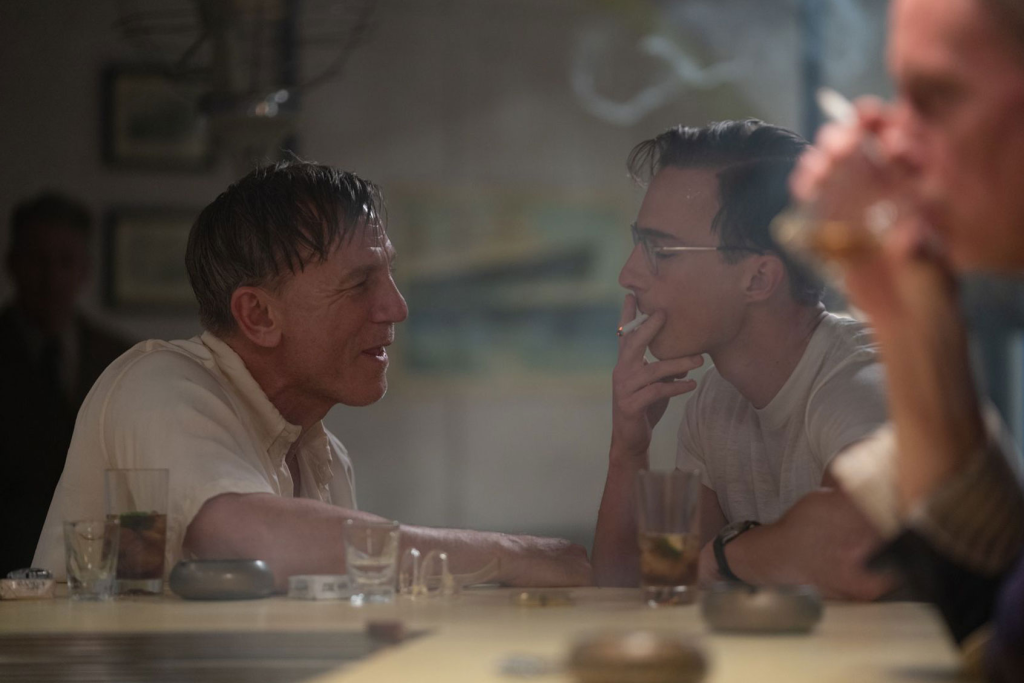
Queer (2024, dir. Luca Guadagnino) – Leave Me Alone by New Order
Pass the beer and cigarette, Daniel Craig and Luca Guadagnino both know that nothing compliments shame, longing, and drug use more than 80s synth wave. “Leave Me Alone” nestles itself into Queer’s already masterful anachronistic score in a moment so devastatingly crafted that it rivals Marlene Dietrich in Shanghai Express for most evocative smoking shot. Guadagnino begins the scene on Lee’s cluttered table with the quiet diegetic sounds of his lighter and the bubbling of heroin before panning up to reveal Lee’s expression of hollow shame as the high and the reverb guitars begin. Despite what the title may suggest, Lee wants anything but to be left alone. Scooch over Lee, is there room for one more? – Hanne Brabander
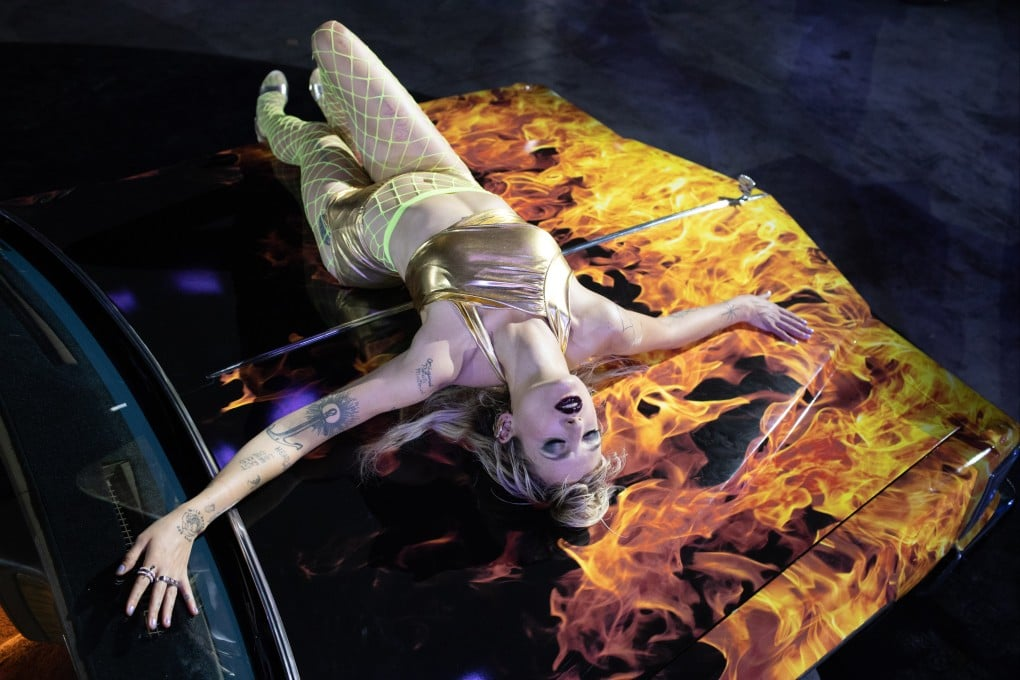
Titane (2021, dir. Julia Ducournau) – Light House by Future Islands
There are few things about Julia Ducourneau’s sophomore film Titane that don’t stick after you watch it. There’s a blood-soaked tenderness lying underneath its hard metal shell that makes the film so difficult to forget. Among scenes of (literal!) car sex, murder, and an attempted abortion, one scene stays most vivid in one’s imagination: a four-minute slow-motion sequence lit in brilliant violet, with “Light House” by Future Islands playing over firemen dancing. It’s a moment of vulnerability among moments created by concrete emotional walls where the protagonist Alexia finds momentary acceptance and safety. The song’s soft, dreamy quality complements the rare smile on her face as she dances with the firemen, unaware of what was to come next. – Melanie Curtis
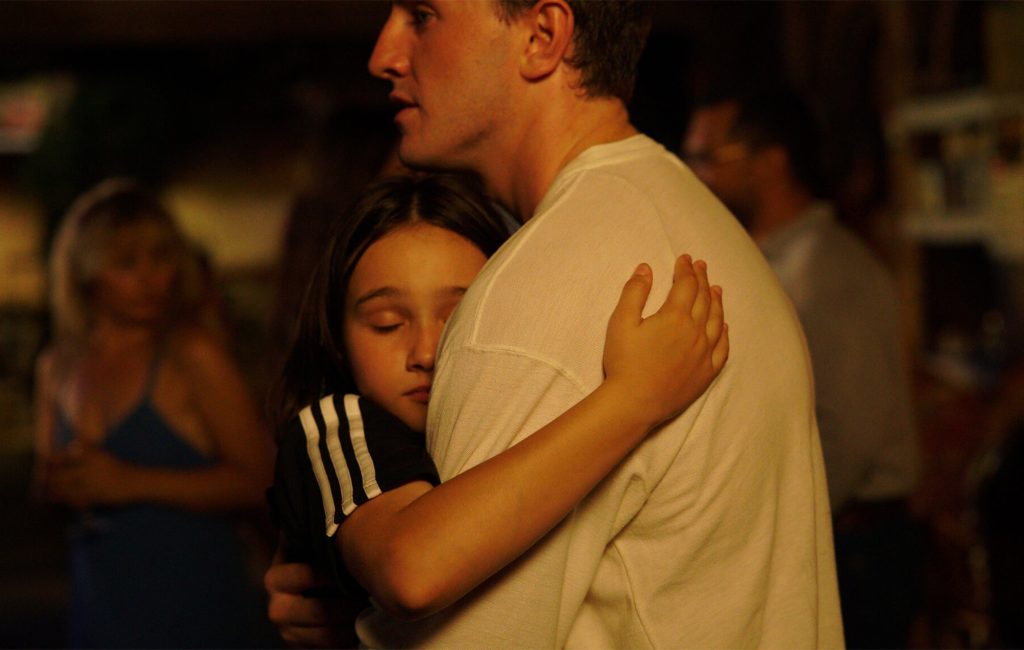
Aftersun (2021, dir. Charlotte Wells) – Under Pressure by Queen & David Bowie
There aren’t many needledrops this century better than Queen and David Bowie’s “Under Pressure” in Aftersun, directed by Charlotte Wells. Appearing at the emotional peak of the film, Mercury and Bowie’s soaring vocals soundtrack the penultimate interaction between Sophie (Frankie Corio) and her deeply troubled father Calum (Paul Mescal), a dance scene that oscillates wildly between a relaxing vacation and a suffocating rave. This juxtaposition exemplifies the central tension of the film, Calum’s comforting role as a father versus the struggles of his deep depression. The song progresses from a feeling of hope and triumph to something much more existential, as the climax of the song suddenly combines with the musical score to create a staggering moment of emotional rawness. As the soundtrack shifts from diegetic to non-diegetic and the realism shifts to impressionism, we are faced with the crippling realization that Calum’s alienation from the world makes it impossible for him to truly love Sophie in the way she needs. Despite Bowie crooning that “love dares you to change our way of caring about ourselves,” sometimes the hurt is just too much. – Lachlan Wong
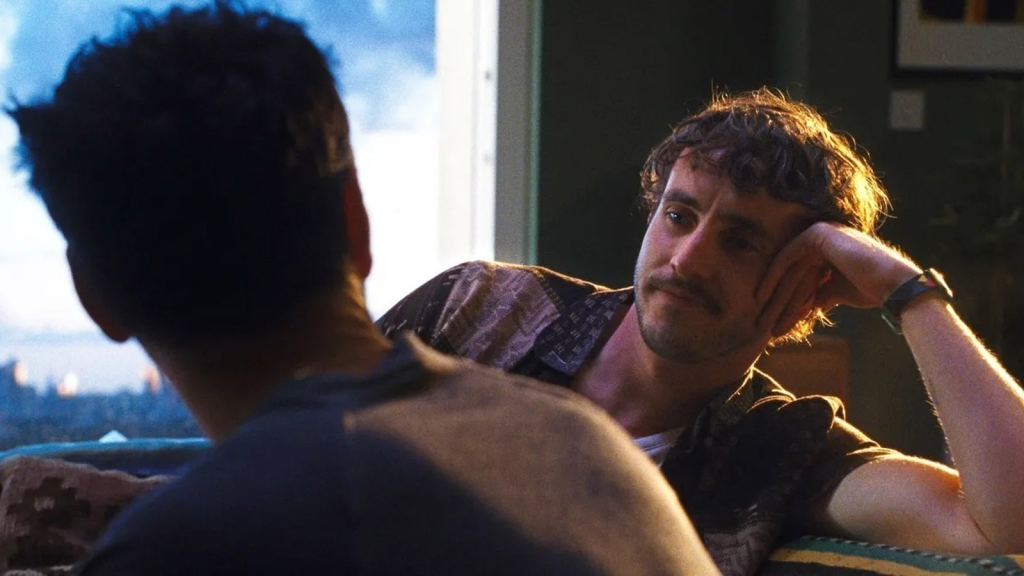
All of Us Strangers (2023, dir. Andrew Haigh) – Death of a Party by Blur
One of the scariest things in the world is having a crush. Another scariest thing in the world is having to do mystery drugs to impress a really hot person. In All of Us Strangers, it somehow gets even scarier, because the hot person is Paul Mescal looking the most beautiful he’s ever been, and the drugs cause a K hole that leads to childhood flashbacks of dead parents who died young and didn’t really know the full truth about their son so their love was always missing a little something. Aaah! Luckily, because Andrew Haigh isn’t a horror director, this nightmare situation is expertly scored with Blur’s perfect Death of a Party, a song about being a little suicidal during the waning moments of a house party you didn’t want to be at in the first place. The music choice is what makes the whole situation less terrifying and more existentially dreadful. That might not be better, but the scene is certainly excellent. – Amélie Khiar
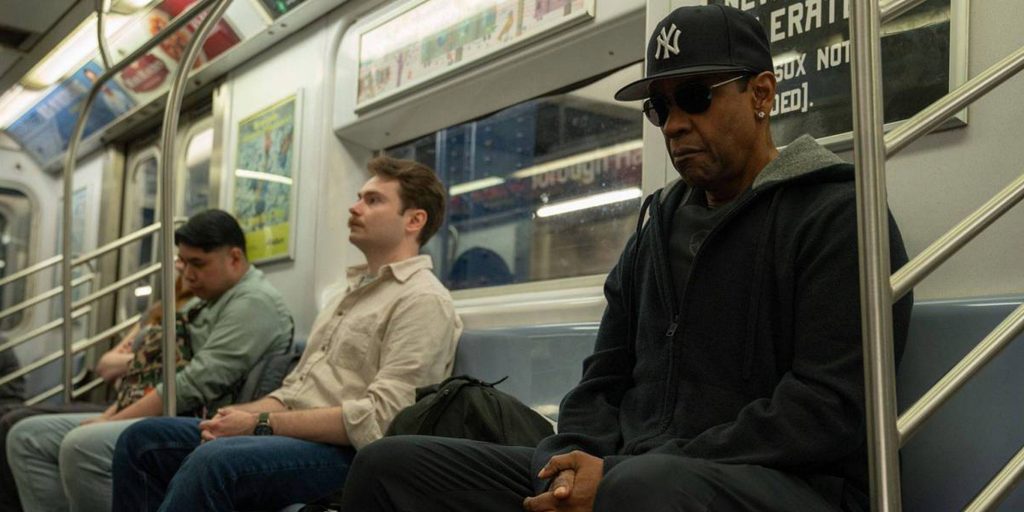
Highest 2 Lowest (2025, dir. Spike Lee) – Puerto Rico by Eddie Palmieri
HIghest 2 Lowest drags along as an overdramatic retelling of the original Kurosawa film until Spike Lee flips a switch and A$AP Rocky guns a motorcycle through the festive streets of Harlem. As he dodges NYPD and waves through Puerto Rican Day Parades to get away with a backpack full of Denzel Washington’s money, Eddie Palmieri leads the celebration with a medley of his classic material with the exuberance of a bandleader half his age. His sheer presence changes the tide of the film; few have a larger footprint in the Nuyorican tradition and Palmieri’s presence expounds Lee’s love for New York City in a sincere and grateful manner. It’s a love letter to a rarely depicted New York, one that has clung onto its celebratory traditions, though the ensuing decades have threatened its survival. Palmieri’s passing just weeks before the film’s wide release added yet another tributary layer to the appearance, offering Palmieri one more offering of gratitude before he left this realm. – Benny Sun
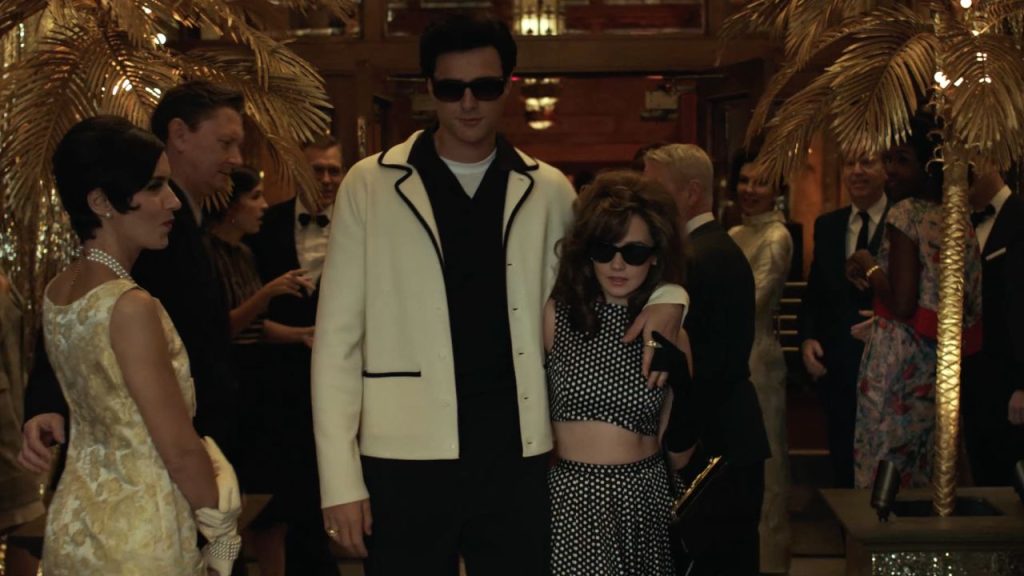
Priscilla (2023, dir. Sofia Coppola) – I Will Always Love You by Dolly Parton
Sofia Coppola’s Priscilla delivered one of the more somber needle drops of the 2020’s, as audiences watch Cailee Spaeney’s Priscilla drive off and away from Graceland post-divorce forever, as Dolly Parton begins to wail “And I—…” Coppola continuously forces her characters to toe the line between girlish naivete and sobering adulthood, and the end of this film is no exception. Parton’s earnest words perfectly capture Priscilla’s childish adoration for Elvis, without being patronizing or too on the nose. It’s not teeny-bopper like much of the soundtrack, and marks a shift in Priscilla’s independence. After watching the incredibly tumultuous relationship Priscilla shares with her ex-partner, Priscilla is ready to evolve past her emotional damage, and so are viewers. While we do not know what will happen next, Parton’s sweet voice signifies that change has come, though on some level, Priscilla will tragically “always love” her abuser. – Lizzy Jack
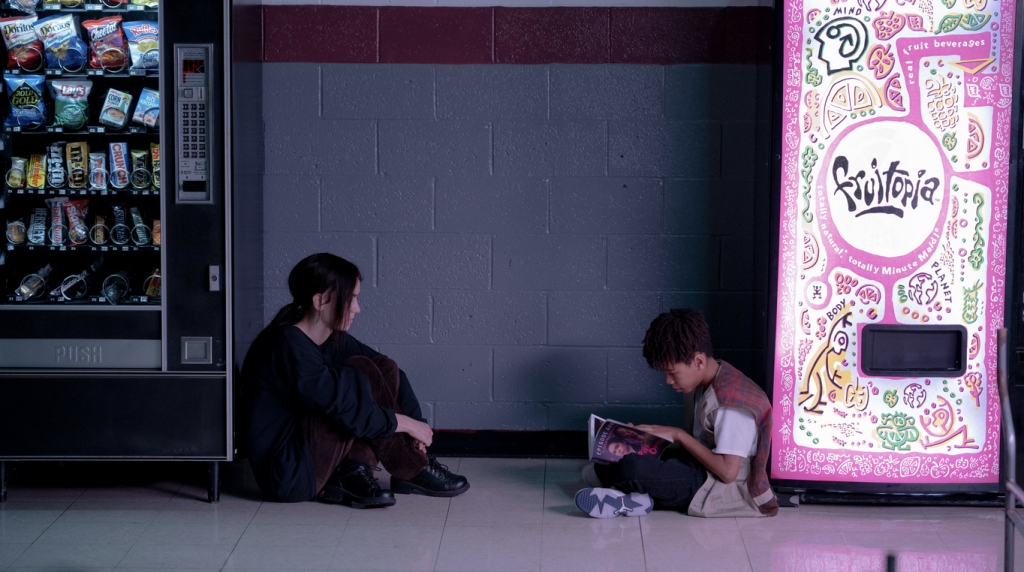
I Saw the TV Glow (2024, dir. Jane Schoenbrun) – Starburned and Unkissed by Caroline Polachek
No artist is more well-suited for the fantastical, fuzzy, and often isolating world of Jane Schoenbrun’s I Saw The TV Glow (2024). She reaches both electronic and emotional heights in her original song for the film, “Starburned and Unkissed.” “Come home, the kettle’s whistling/My heart’s a ghost limb reaching,” she croons over a triumphant instrumental that feels not of this world. Following the original soundtrack by Alex G for We’re All Going to the World’s Fair (2022), Schoenbrun’s sophomore release calls upon the likes of Yeule, Phoebe Bridgers, and Sloppy Jane to build a world of nostalgic haze that aches with the static sensation of a forgotten memory. But, it is Polachek’s voice over a sequence of Owen (Justice Smith) wandering the school’s hallways that stands out as the most breathtaking—and poetically forlorn—needledrop in the film. – Sydney Figueredo
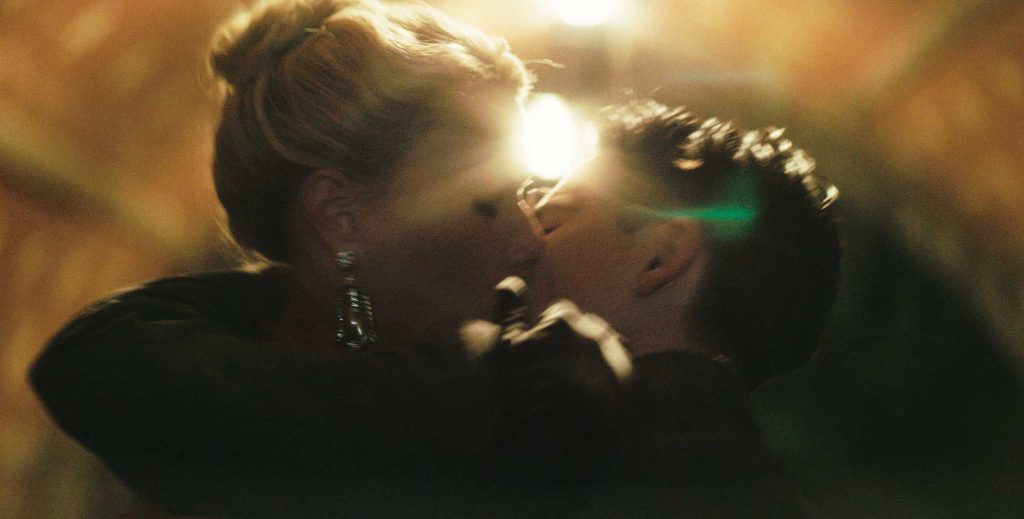
Marty Supreme (2025, dir. Josh Safdie) – Perfect Kiss by New Order
Challengers taught us tennis and drum machines are a great duo, but Marty Supreme proves table-tennis and 80s new wave are even better. The genre is a perfect fit for the lead, a man ahead of his time that no one takes seriously trying to use pure swagger to shed his outsider standing. There are a few more obvious needledrops throughout (including a classic Tears for Fears song that’s spoiled in the trailer) but the most propulsive comes from New Order during a confrontation with Rachel and her husband, Ira. Hearing the blaring synths ping-pong from side to side is worth the price of admission to Marty Supreme alone. Not to mention the deep bench of brilliant supporting actors—in this scene Emory Cohen goes full Pacino while Fran Drescher gets the best one-word line delivery of the film. As the noise of croaking frogs creep in we see Marty, exhausted but refusing to accept defeat. You can’t help but commend the total commitment, from him and New Order, even though their goals sound so silly. Their sense of purpose is the American dream in miniature; ridiculous, synthetic, and beautiful. – Max Cohen
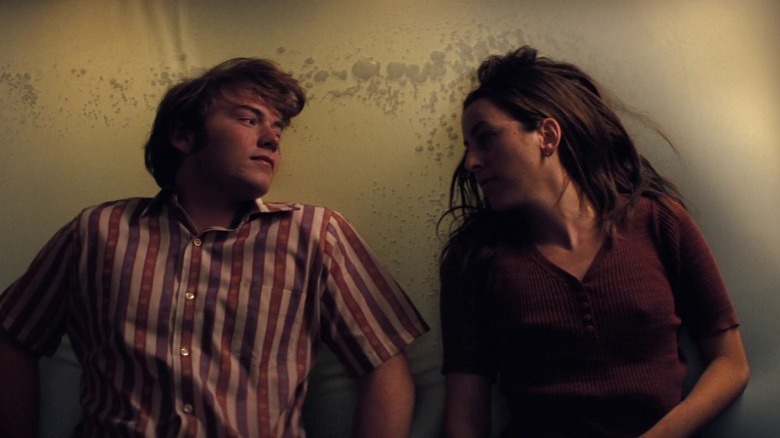
Licorice Pizza (2021, dir. Paul Thomas Anderson) – Let Me Roll It by Paul McCartney
Licorice Pizza is a movie about big feelings. The film works in cycles of anticipation and disappointment as its two leads, Gary and Alana, come in-and-out of jobs, or relationships, and of each others’ lives. “Let Me Roll It” comes in at the end of a particularly arduous stint of the two arguing, when Alana falls off of a motorcycle in a poorly-planned stunt culminating in Gary scooping her up off the ground. Every part of the scene is at least a little bit wacko: Alana lying on the dirt, dressed up like a cowgirl; teenage Gary running to rescue her, sweaty and panicked; Sean Penn screaming and downing whiskey in the background. It’s underscored aptly by Paul McCartney’s bodacious riff and sincere delivery of “Your heart is like a wheel / Let me roll it.” Gary and Alana escape to Gary’s waterbed store and lie down on a translucent mattress, next to each other but not quite touching. The song reaches its peak as Gary stares at a now-sleeping Alana, reaching out to touch her but deciding against it, turning back and closing his eyes. It’s a moment of triumph and a flush of embarrassment in a way that feels so, so teenage, and McCartney’s jagged pop grandiosity underscores it perfectly. – Darlene Marsh
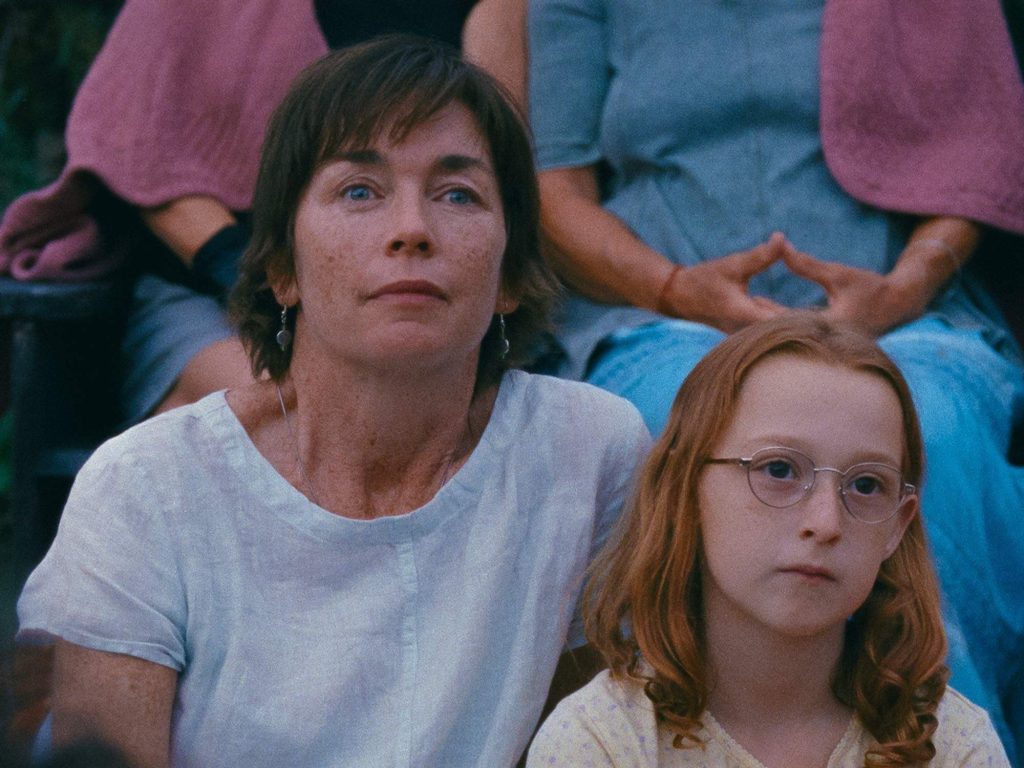
Janet Planet (2023, dir. Annie Baker) – Follow That Doll by Anthony Mawer
Playwright Annie Baker’s first feature, Janet Planet, tells the story of 11 year-old Lacy (Zoe Ziegler) and her chiropractor mother Janet (Julianne Nicholson) in a humid Massachusetts summer in 1991, as they navigate the struggles of dating and growing up. The needledrop in question occurs early on in the film, when Lacy goes to the mall with Janet, Janet’s boyfriend Wayne, and his daughter Sequoia. Soundtracked to the 1950s exotica track “Follow That Doll”, the scene follows Lacy and Sequoia as they prance through the building, running past brightly colored clothing stores, candy shops, and a misty fountain. The saccharine sounds of the bouncing bass, uppity strings, and jangly guitar all evince the certain ineffability of the magic of being a kid and running around a mall without adult supervision. There’s a joyous vitality to the moment, especially due to the fact that up until this point, the primary soundscape has been made up of summer ambiance and quiet, introspective conversations. By allowing for a moment of release and ecstasy, Baker plunges the audience into the depths of their nostalgia, creating a depiction of childhood with an idyllic magic. – Lachlan Wong
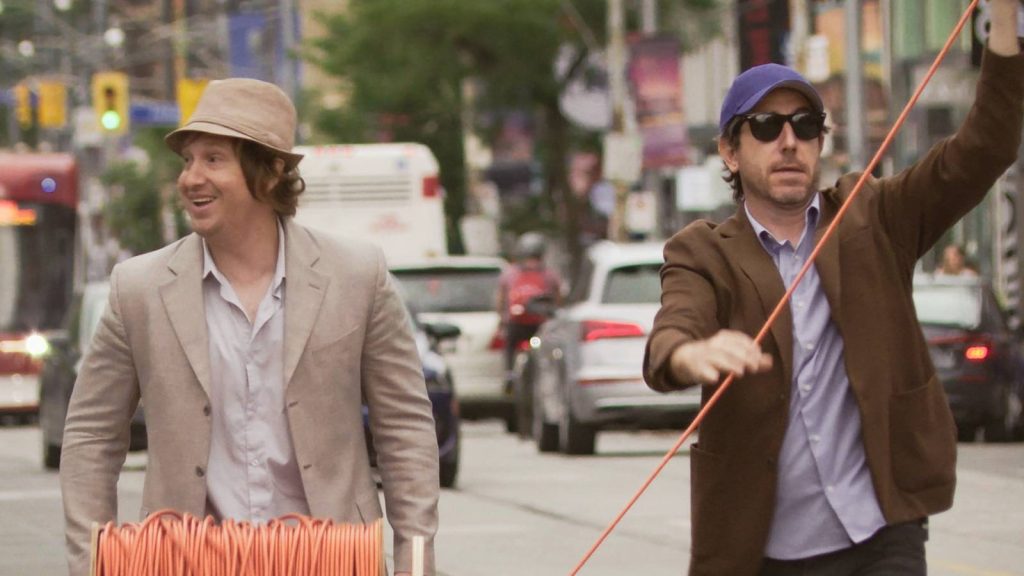
Nirvanna the Band the Show the Movie (2025, dir. Matt Johnson) – Never Come Down by Brave Shores
Even for a film full of elaborate, non-sequitur gags, “Never Come Down” seemed too polished to have been made just for a plot-driving joke in Nirvanna the Band the Show the Movie. In the film, the song is inspired a loose melody the time-traveling 2025-Jay played to 2008-Jay while 2025-Matt steals a bottle of Orbitz, and goes on to be Jay McCarroll’s big defining hit when 2025-Matt messes with the timeline and disbands Nirvanna the Band. The film treats “Never Come Down” as a dopey runaway hit that brought Jay McCarroll an inordinate amount of fame, the one that started it all. It takes a level of bravery to recognize your own song as fitting for this occasion, the kind of song that, yeah, a boring white guy would get really famous from.
In reality, “Never Come Down” was a runaway hit run by actual-Jay’s defunct indie pop duo Brave Shores. The track received some attention in Canada, but became a runaway hit around Trump’s victory in 2016, inspiring strange YouTube edits and becoming a minor anthem for hardcore MAGAts at the time. The band politely disavowed the association, but the track received another boost eight years later and now sits, by far, as the band’s biggest song (“It’s the Trump band!” one YouTube comment reads, “I’m glad such a great group of people support our country and president. Much thanks!”). Perhaps the inclusion in the film is an attempt to reverse-Streisand effect the track’s legacy. The film’s creators speak of a kitschy, 2000’s rap inspired music video they shot that was largely cut but is visible in the movie for a split second. Hopefully its release helps swat any lingering fascists. – Benny Sun
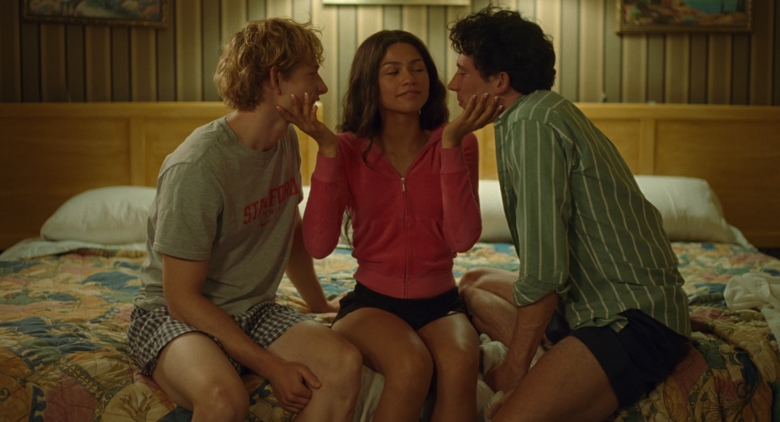
Challengers (2024, dir. Luca Guadagnino) – Uncle ACE by Blood Orange
Challengers spends most of its runtime convincing the audience that what we’re watching spans much more than a game of tennis, only to eventually pull the rug: everything was tennis all along. Luca Guadagnino’s most pointed way of communicating this comes through the needle-drop of eclectic British artist Blood Orange’s “Uncle ACE,” the outro of which soundtracks the bedroom makeout between Tashi, Art, and Patrick with the kind of palpable tension that lifted the film to burgeoning cult classic status. The track’s rising horn, goaded on by a prickly beat, punctuates the varied releases of the trio’s built-up wells of sentiment, creating the first inflection point of the roller-coaster plot. After the song’s climax, Art and Patrick look up at a smiling Tashi, satisfied after maneuvering the two friends at her will. Not everything ends (or starts) on the court in Guadagnino’s vision of athletics-borne romance, but there’s always a winner—or three. – Gabe Sachse
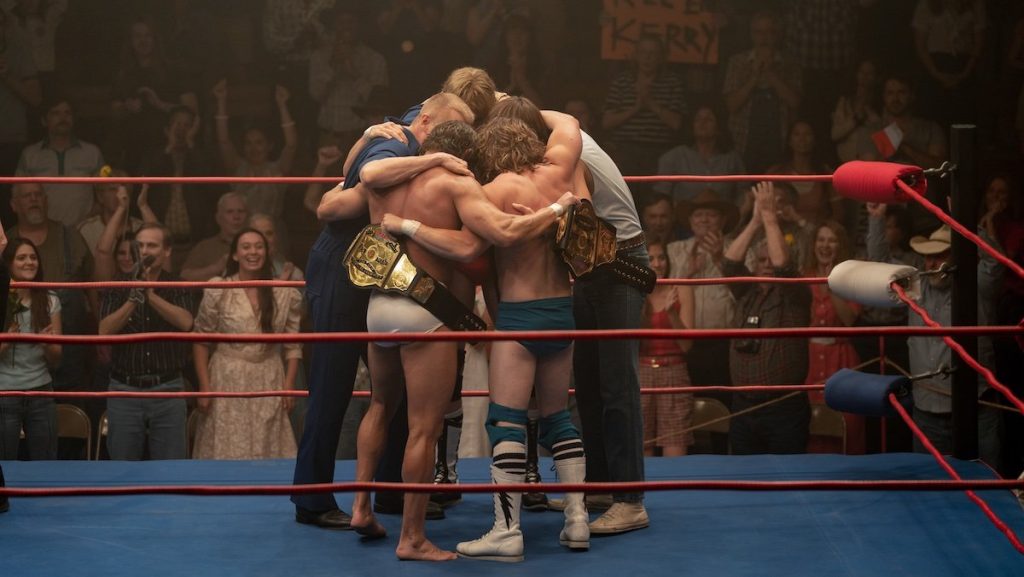
The Iron Claw (2023, dir. Sean Durkin) – Tom Sawyer by Rush
It feels like cheating to include this song because it has the most iconic introduction. You could start any scene in any movie with “Tom Sawyer” and guarantee that synth line will make it 200% more thrilling. Director Sean Durkin understands this and presents the track with a deserving amount of ado. Hiding in his bedroom, Mike (Stanley Simons) peels plastic lining off a record without showing the cover, clicks a cable into his amp, then his turntable, before carefully lowering the needle. At the first drumbeat he flashes a stupid grin, but not enough suspense has built! As Geddy Lee starts singing, cut to Jeremy Allen White ripping bicep curls while the song bleeds through the garage. When we’ve finally earned “Tom Sawyer” at full volume, it scores four exquisite minutes of cool-guy stuff. Three hulking brothers crawl into the ring, glistening while clothes-lining their opponents in sync. Zac Efron’s enormous torso blots out floodlights as he dives from top rope in slow motion. Drugs, gambling, motorcycle riding, heavy petting with Lily James, all juiced to 11 thanks to Rush. Like a jock-Goodfellas, everything electrifying about the front half of The Iron Claw inevitably takes a turn for the tragic. Still there’s no denying that the rise of the Von Erichs is one mean, mean ride. – Max Cohen
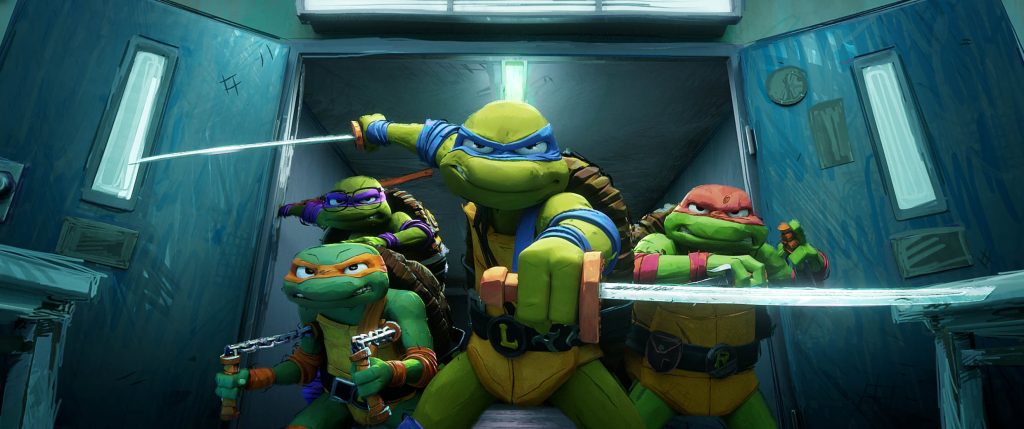
Teenage Mutant Ninja Turtles: Mutant Mayhem (2023, dir. Jeff Rowe) – Cavern by Liquid Liquid
There’s a heart to Teenage Mutant Ninja Turtles: Mutant Mayhem and its depiction of the sewers of New York that rarely pops up in, well, kids’ films. This can largely be attributed to the soundtrack, which is actually jam-packed with 90’s hip-hop classics from De La Soul, M.O.P. and Blackstreet. But like its underground setting, it shines the brightest with cult pulls like Liquid Liquid’s no-wave classic “Cavern.” The oft-sampled 1981 cult classic not only contributes to the film’s atemporal depiction of New York, but also sincerely and intelligently the city’s underground spirit. Sandwiched between Hugh Masekela’s classic “Riot” and “Dance,” the classic track by NYC underground peers ESG, the track selections on Mutant Mayhem are just one of the many ways it avoids belittling the audience, even if they might mostly be rambunctious 10-year-olds. – Benny Sun
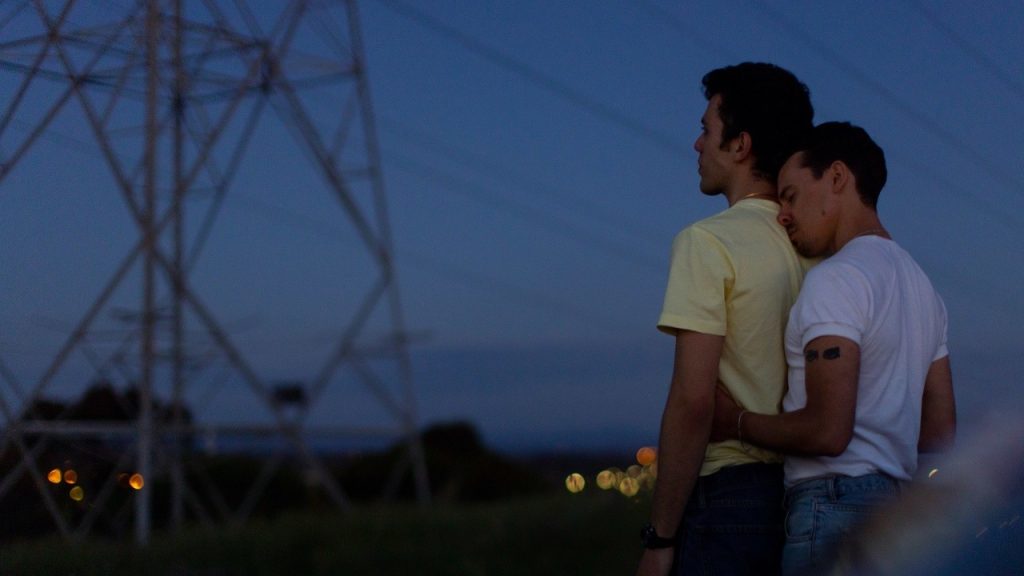
Of an Age (2022, dir. Goran Stolevski) – Maneater by Nelly Furtado
The second film of Goran Stolevski’s to be released in 2022, Of an Age is a grievously under-the-radar chronicle of first love, taking place over two days, one in 1997 and another in 2010. In 1997, closeted Serbian immigrant Kol (Elias Anton) has a chance encounter with Adam (Thom Green), the older brother of his party-girl ballroom dance partner Ebony (Hattie Hook), changing his life forever. The perfect needle drop in question happens in the second part at the wedding of a mellowed-out Ebony, who goads Kol into performing an expertly choreographed routine as a now-married Adam watches from afar. 13 years later, Kol and Ebony seem to fit perfectly into their former roles; Adam can only look on, a wistfulness for a life he could’ve led betrayed on his face through a melancholic smile. All that, soundtracked to Maneater! – Amélie Khiar