
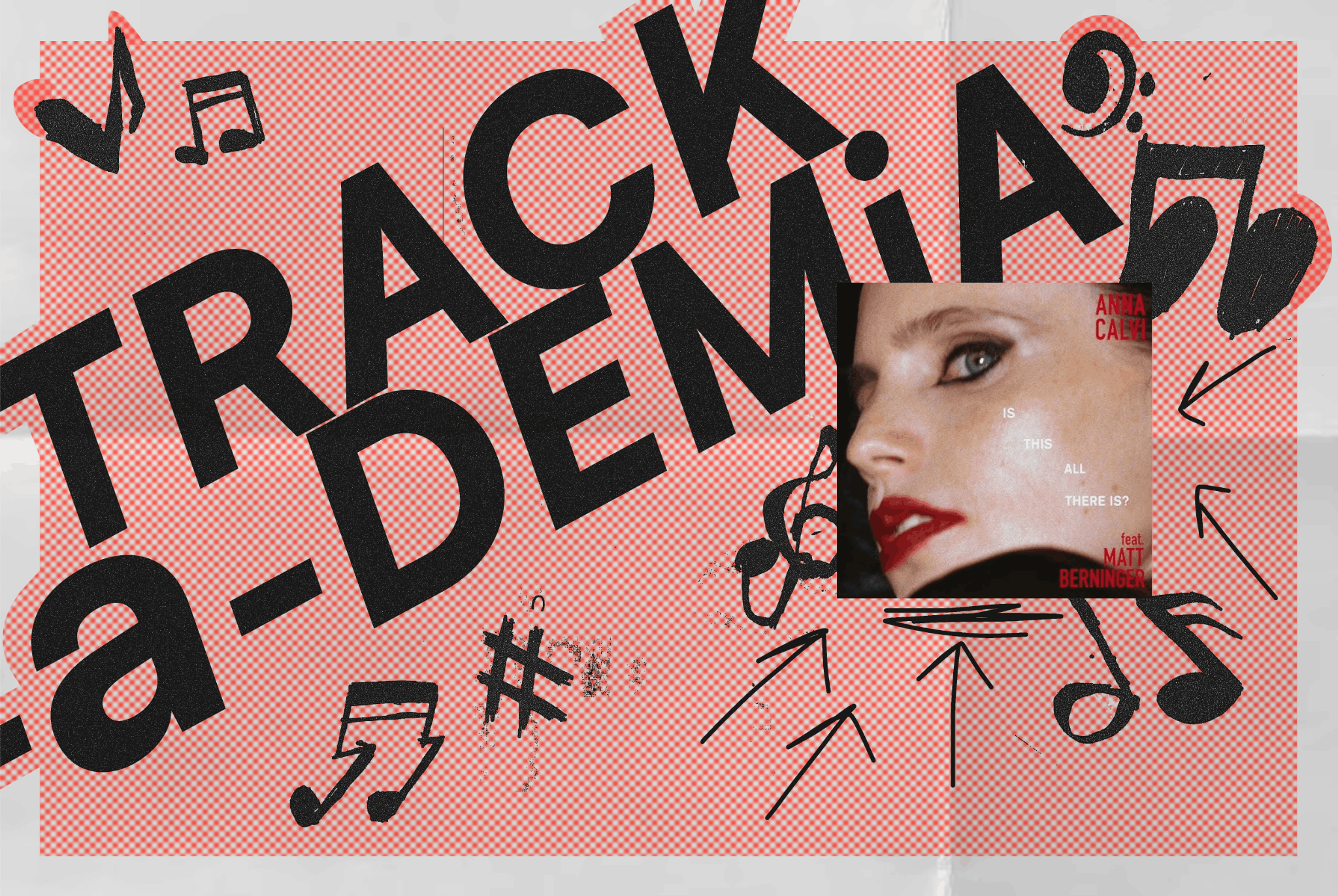
The closing title track on Anna Calvi’s EP, “Is This All There Is?” featuring The National’s Matt Berninger, is a soaring number fit for the end credits of a teen coming-of-age film which, depending on your disposition, is either high praise or mildly offensive.
Calvi, having always moved in rarefied company, with collaborators over the years including Brian Eno and Rob Ellis, continues in that tradition with her EP. Each track is paired with a different collaboration, with an impressive roster of Iggy Pop, Perfume Genius, and Laurie Anderson before arriving here at Berninger. Their paired vocals are the song’s central drama, Berninger’s low, characteristically unhurried baritone works well with Calvi’s rich velvety voice and the two move fluidly between echo, call-and-response passages, and moments where she lets go entirely towards the end in a high, borderline operatic, holler.
Perhaps the most characteristic of the song, though, is the dramatic swelling of the arrangement in the chorus, with a particularly lovely guitar line that feels incredibly cinematic when combined with the galloping percussion. The solid repetition gives the song an almost devotional expansiveness, and builds great momentum you feel yourself wanting it to carry on with, but sadly fails to see through, containing disappointingly little lyrical and instrumental variation for an almost five minute track. The title phrase, ‘Is this all there is?’ cycles over and over with the intent and insistence of a mantra, but the execution of an incomplete thought stretched thin, relying too heavily on the question’s existential weight as a substitute for substance.
Calvi may very well be working in that repetitive tradition consciously. But the counter-argument is that great art-rock repetition (think Marquee Moon, think Hounds of Love) tends to offer us something new with each rotation, where here, the very promising rhythmic momentum that builds so compellingly in the song’s first half has nowhere fresh to go by its third.
Perhaps the repetition is unimaginative, but perhaps the repetition is the method. Either way, Calvi is working in a well-worn art-rock capacity that knows exactly what it is, though whether it represents any real reinvention or innovation is debatable. When taken purely in that capacity, the song is confident and often beautiful but whether that’s enough depends entirely on what you came looking for.