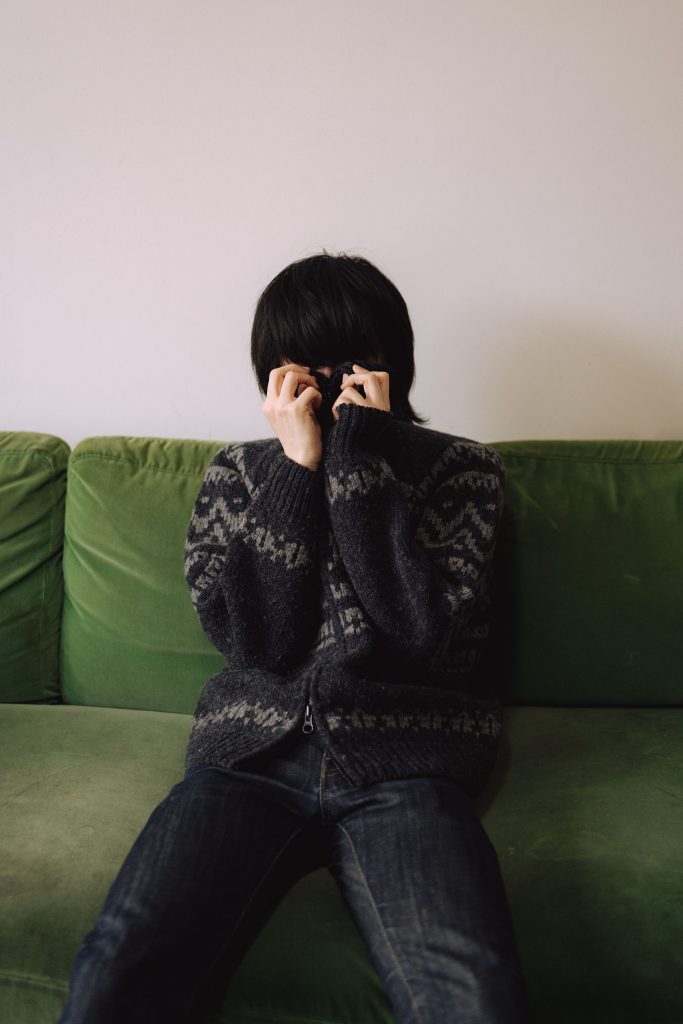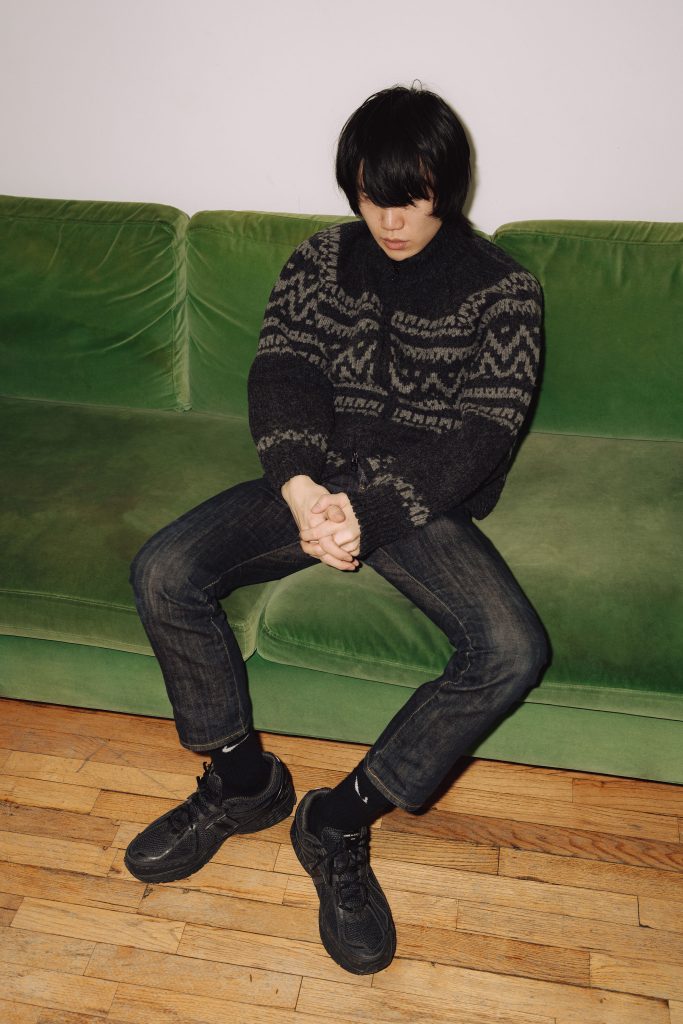
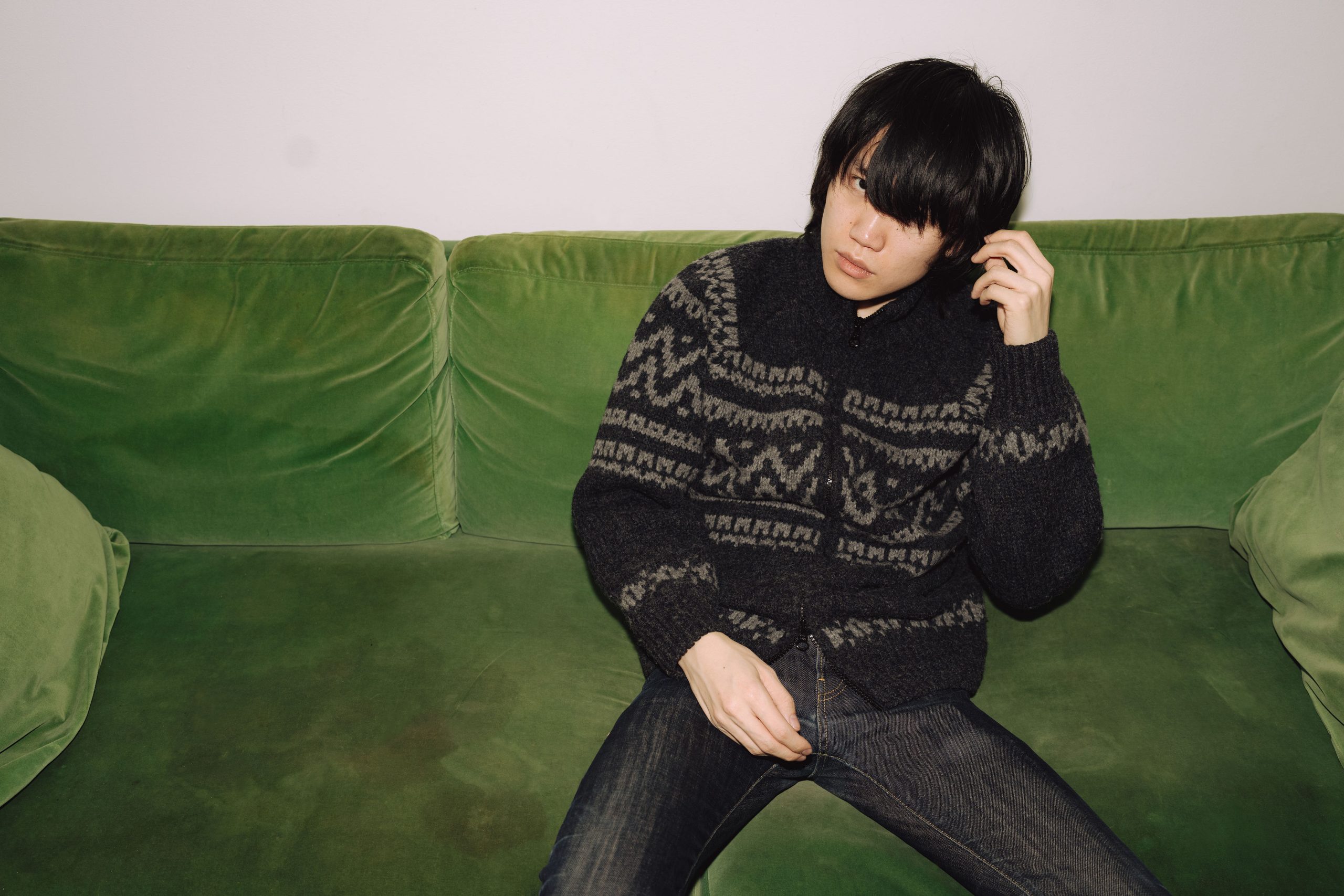
Jackzebra landed in Western consciousness with an exotic hype that had the same sensational fish-out-of-water media hype of Linsanity. Reductionally dubbed the Chinese Bladee by online commentators, there was a swift move to categorize Jackzebra as a known unknown. Media narratives soon emerged, that Jackzebra was somehow a representative of post-industrial youth unrest in China, or that he is the manifest of a long-awaited globalization spurred by rap music’s relocation to the internet as a regional hub. The world has been unable to see anything but Jackzebra’s mystery and moodiness, and they’ve been hellbent to assign meaning to it.
But fans that clamor and rage for Jackzebra at any one of his American shows aren’t gathering in the hundreds to discuss youth representation in China’s post-firewall underground culture. Jackzebra has become a fixture of the Western underground thanks to his ability to let it all go, a keen talent to release all inhibitions via his overwhelming and blissful cloud rap. It takes the vocal abandon of cloud and rage rap to the next level; while listeners could decipher what Kuru and Lucy Bedroque were rapping if they really tried, it would take a lifetime for Jackzebra’s American fans to learn in’s-and-out’s of Mandarin Chinese. While I don’t doubt that significant swaths of his young Asian-American fans take pride in seeing a recognizable reflection of themselves on stage, that’s not the main point. The point is to rage.
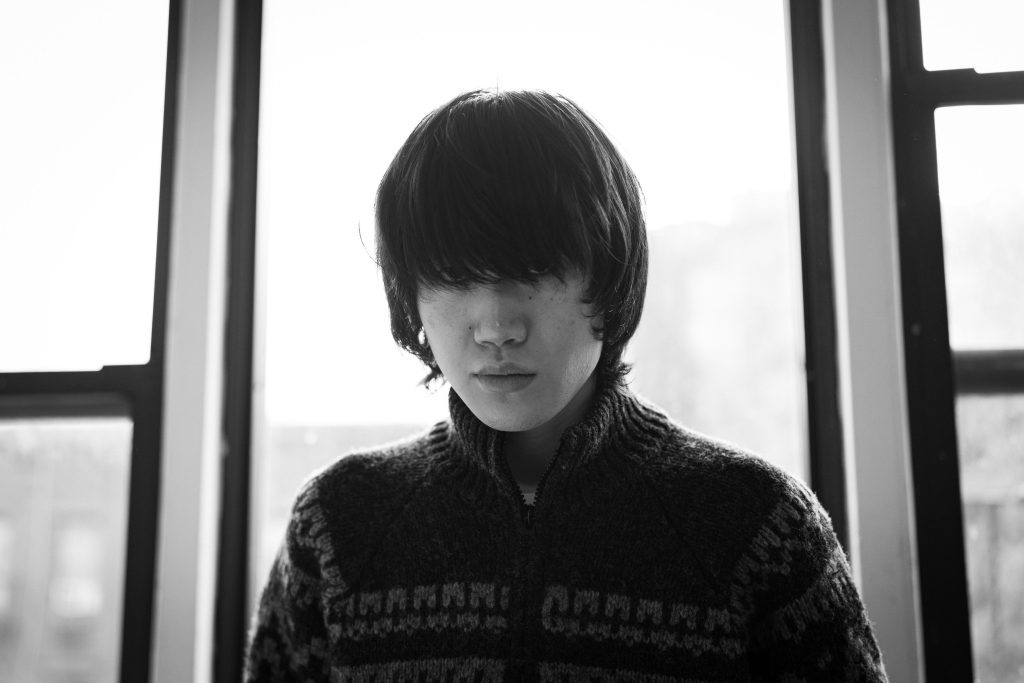
Since his 王中王 mixtape blew up stateside, Jackzebra has become a celebrated node in the underground network drawn together by rap collective Surf Gang, who produced last year’s Hunched Jack Mixtape. He seems intent on enjoying the blessings of his present, and less interested in what the future holds. Now 24, he describes his mixtapes as a form of emancipation, with no process of editing or self-censoring that forces him to misrepresent himself. Thousands of words have been written in an attempt to decipher Jackzebra, his creative endeavors, and the political machinations that could produce an artist like this. When I sit down with him for an interview, I don’t get the sense that Jackzebra has anything to hide. He’s not a man of many words, but Jackzebra always says what he means. There’s just never that much to say.
This interview was originally conducted in Mandarin and has been condensed and edited for clarity.
What did your parents want you to grow up to be?
When I was younger, my dad wanted me to join the military. And my mom wanted me to be an accountant.
What’s their reaction to your current music career?
My mom is supportive. But my dad doesn’t really understand so he’s not supportive. He thinks that men at this age should just find a steady job.
There’s a lot of people your age who make this music, like it’s kind of a movement. Have you heard of any wider reaction from older generations?
Yeah, I’ve heard. [in English] It’s just…OG’s. They don’t really fuck with the new generation. They’re not ready yet. [in Mandarin] They don’t really understand it. I think they need some more time to accept it.
What about your peers? The folks you grew up with. Do they understand it a little better?
Like my old classmates? A lot of them really don’t understand. It feels like the stuff we like is just different. It’s like we’re not from the same world.
Are the people going to your shows typically younger than you?
A lot of them are high-school kids.
When you were in high-school, were you already into this kind of music?
I started listening to Billboard hits when I was little, popular songs. In middle school, around 12 or 13, I started listening to rap music, like A$AP Rocky, and then slowly got into Yung Lean, Lil B, SpaceGhostPurrp, these cloud rap artists.
Have you ever thought about making pop music? Or working in the American music industry?
When I was really little, yes. But now, I feel like it’s too extreme, there’s too much going on.
Who’s the most famous person who’s reached out as a fan?
It’s not that ridiculous, but it’s probably Kevin Abstract. He was asking me to collaborate, but there haven’t been many opportunities.
When you were younger, you went to England for school right? What was your first impression of Western culture, was there a big culture shock?
It was like a summer camp, but yeah. My first time leaving China was to America, actually, with my dad. The biggest culture shock was in Las Vegas. I remember in the hotels, there were all these slot machines, and my dad took me to take a look. Security rushed up and told us that kids weren’t allowed to mess with them. That was a culture shock, I thought it was funny. I thought they were just video games, then when I grew up I realized they were for gambling.
What’s the experience like playing shows in America, versus the shows you do in Asia?
They all feel pretty similar. I do a lot of shows in China and abroad as well now. They’re all really interesting. In America, the audience is a little bit crazier, whereas in China they’re a lot shier.
Did you know about Surf Gang, or did they reach out first?
I’ve always known about them, like back in 2019. They had just started doing this Surf Gang thing. I’ve been listening to Surf Gang for so many years. Around the spring of 2024, when I came to America for shows, I was with my friend and producer eliproperr, who’s also a Surf Gang member. I went to his house and met them. I thought they were all good guys, like flea diamonds and evilgiane, and I’ve just kept making music with them since.
Are they working on your debut album?
I’m only doing mixtapes right now. It’s not time for the album yet.
On your mixtapes, do you edit yourself less and let everything go? Or are you still thinking about what should go on one project or another?
I think I just let everything go and go with the flow.
What was the first time you realized that people were really listening?
It was after [2024 mixtape] 王中王. I realized there were people everywhere listening to my music and sharing it. I thought it was baffling.
Do you think there’s something special about that mixtape? Why was that the one that blew up?
That was the first time I really let myself go and became totally vulnerable while making a mixtape. At that time, I found a short-term lease in Chengdu, and when there was only a few weeks or so left on someone else’s lease, I asked them to transfer it to me. So over two or three weeks, I was there just making the mixtape. I felt a lot of freedom in that process.
Did you feel more pressure when you were making Hunched Jack Mixtape considering the success of 王中王?
I felt a little more pressure than when I was making 王中王. I wanted the mixtape to be darker. A dark vibe, that kind of feeling. But all in all, it was all pretty chill and relaxed. Just a little more pressure than before.
I read a lot of coverage about you, and a lot of media will assign this larger meaning onto you and your work. I read an article saying that your music has to do with post-industrial China. Is that strange to you?
I think that’s really weird. A lot of Western media will dramatize these things, blow it out of proportion. It’s just music. Their perspective, the way they see things is too serious.
When they use you to represent the entirety of China’s underground, do you think that’s inaccurate? Or weird?
I think it’s alright. But I can’t represent all of China’s underground music, since I’m just doing it all on my own.
When you read coverage of your own work, do you think it’s just outright wrong? Or their thinking is just too complex?
They’re thinking too much. They’re making it too complicated, they have these misunderstandings. If you showed it to a person in China, they’d think it’s pretty weird. The perspectives are different.
Did you read the reviews that Pitchfork did about your mixtapes?
I thought the 王中王 review was a little too overblown, or exaggerated. But the Hunched Jack Mixtape review was okay. There was a little more to do with the music.
What does growing mean for you, in these next steps? How do you wanna evolve?
I’m just going to keep making mixtapes, then I want to make a real official debut album. I’m just living my life. Enjoying the present.