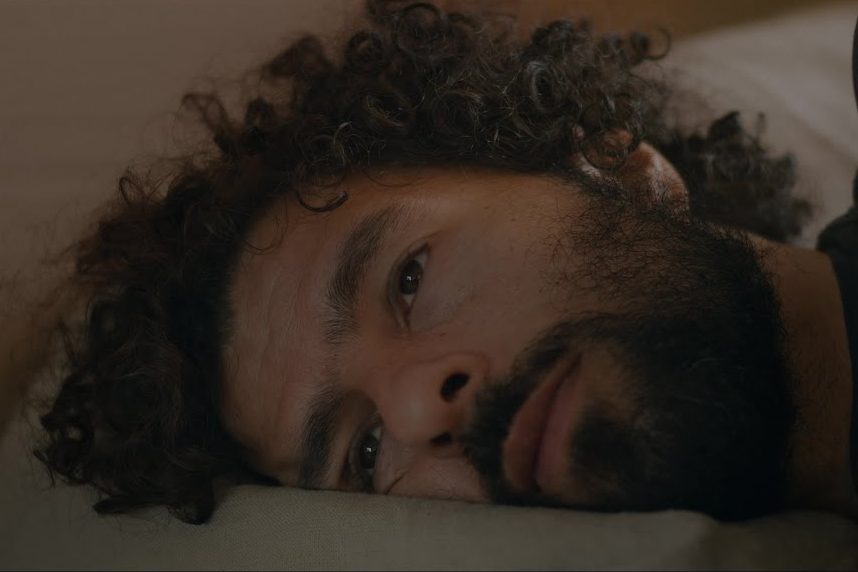
José González has been extending his role as a key player in the Swedish folk scene. Since his first solo album Veneer in 2006. González has been the final ingredient in a nurtured mixing bowl of the most emotionally charged worlds recent media, not just music, has had to offer. You might recognize the quintessential plucking of his nylon-strung guitar when “Far Away” plays in the Western adventure game Red Dead Redemption, his tender vocals assisting John Marston’s newfound journey as he vehemently enters Mexico for the first time. Or when Max Caulfield melodramatically looks out the school bus window to an overcasted Arcadia Bay listening to “Crosses” through her tangled earbuds in episodic story game Life is Strange. Gonzalez’s irreparably fraught lyrics make his music a no-brainer figurehead of poignant media history.
The Swedish indie-folk singer-songwriter hadn’t always been connected to his current sensitive, soft sound. González’s first band, Back Against the Wall, was a Gothenburg-based hardcore punk group inspired by the intense sounds of Black Flag and Misfits from the early 90’s during his teens. Upon the formation of the folk-rock group Junip in 1998 alongside Elias Araya and Tobias Winterkorn, it had just become obvious that acoustic was his magnum opus.
Nonetheless, growing up with Argentinean parents and listening to Silvio Rodriguez throughout his childhood had caught up to him in the form of fingerpicking and musical style. Now that González has settled down, both personally and in the name of his musical career, current rifts in the creative world have steered him in a newer, more existential direction for his most recent release, Against The Dying Of The Light.
Have you been to New York before? Do you like it? I know a lot of people who aren’t from here don’t like it very much.
Yeah, I love it. I’ve been there many times and it’s great.
You mentioned in a discussion about “A Perfect Storm” that it was “a race towards a cliff, especially with AI.” Could you elaborate on what you meant by that?
I’m concerned because many experts are concerned about super intelligence, a type of AI that isn’t here right now. People who do research on this have been concerned for a while and I’m becoming more and more alarmed as we get to more and more capable AI systems. So the race towards the cliff is like a metaphor that was mentioned by one of the main textbook writers on AI, Stuart Russell. He wrote a book called Human Compatible a couple years ago where he mentions how we’re building these systems, but we don’t really know how to control them. So this control is basically the AI race that’s going on now to build better and better systems that are more and more capable. In this race, it’s actually the AI that wins control and we, as humanity, we lose it. It’s the existential threat that I’m thinking about when I’m writing “A Perfect Storm.”
Your music is just such a breath of fresh air for a lot of people and there’s often references to nature in your songs. Is nature a big part of your songwriting process?
I like nature. I like to hang out in nature and I usually use that when I’m writing. I like to use words like waves and and growth, decay, light, darkness and occasionally, I write songs that touch upon topics that have to do with ecology. But most of the time, it’s about using these words and these images that I enjoy because I think they can reflect stuff in our society, especially with Local Valley, my last album. When I was recording in our summer house, I had the door open and I could hear the birds, so I decided to record them and have them be part of some of the songs.
I don’t know if you have the time when you come to New York, but there’s really beautiful spots upstate you should visit.
I’ve seen a little bit of it when I met Ben Stiller, that was upstate New York.
My favorite game is Life is Strange where your song “Crosses” is the quintessential figurehead of the soundtrack. How do you feel about your music being used in so much of this culturally popular media?
It’s nice when you have directors and creative people wanting to use your music to enhance their vision so I feel honored and it’s fun to be part of this parallel culture that’s going on. I haven’t played that much myself, but I know a lot of people that played Red Dead Redemption and got goosebumps when they heard the song when they’re in the middle of a desert riding on a horse [laughs]. And the same with the process in other games. The only thing I react upon is when people want to use my music for a certain advertisement where the product isn’t something I want to promote so it can be tricky, but I think with everything that is for artistic expression, then it’s just fun.
Do you ever plan on composing a full score or soundtrack?
I’m really slow, so the answer has been no for more than 20 years but I leave the idea open.
I read that you enjoy discovering music from a bunch of different regions—Mali, Sahel. Are there any places that particularly stick out to you music wise?
The ones that I usually mention are, of course, Argentina and Brazil, where my parents are from so I heard a lot of that at home growing up. It has played a big part of my music upbringing, and with the years, especially Brazil, I’ve been finding there’s so much music there from the 60s and 70s and it’s amazing. Around 2005 is when I started listening to music from Western Africa, South Africa, and Tanzania.The standard that I sort of incorporated into my guitar playing is mostly from the Mali, Niger region, where I found out about Torek music, or “desert blues” as Westerners call it.
You were in a group prior to focusing on your solo career. Do you ever plan on working with a group again?
Writing this record was my priority and now that I’m done with it, I’m going to tour with it. But after that, I’m a bit free, so I leave it open. But at the same time, it’s not the first thing to do. I really, really love the music that we did, the 2 albums with Junip and when I play live, I almost always play “A Line of Fire.”
You have kids at home. Do they, in any way, impact your songwriting process or what you write about compared to the beginning of your career?
They impacted me even before they could say anything. My girlfriend, she went through the whole transformation of carrying a kid and then birthing the first, Laura and then Mateo. You realize that our life isn’t forever. That pushed me into writing about existential stuff in a more abstract way. It became more real when I started writing for Local Valley and this album. There’s also the sense of being playful which has come with the territory of being very prolific in terms of coming up with melodies and words. With kids it’s always like having to come up with fun rhymes and melodies on the go which I think it’s reflected in Local Valley. On this new album, I decided to have a bit more of a darker side. But still, “Pacharito” I might not have written without kids.
Is there anything you hope your listeners gain from your music?
I want people to hear the music and just enjoy it. That’s enough. But of course I have my very ambitious side, which is steering humanity towards surviving this very turbulent period of our time with exponential technologies.