There are few artists who can claim as much reach and influence over such a wide umbrella of styles: pop divas like TLC, hip-hop legends like MF Doom, and indie-scenesters like Unrest. That is except for ESG. Birthed in the Bronx in 1978, the dance-funk group are known for their hypnotic rhythms, restrictive basslines, and tender melodies, ESG has pervaded popular, unpopular, and alternative scenes as one of the “most sampled group[s] of all time.”
Sisters Renee, Valerie, Deborah, and Marie Scroggins and close friend Tito Libran grew up together in New York, before uniting to start ESG, which stands for Emerald, Sapphire, and Gold. The Scroggins’ mother aimed to keep them out of trouble, and gifted them multiple instruments to nurture their interest in music. Each took a liking to it, with Renee and Marie on vocals, Valerie on drums, Deborah on bass. At a local talent show, they caught the attention of Ed Bahlman of punk label 99 Records, which propelled them to collaborate with the infamous 24-hour-party-person Tony Wilson. It was with Wilson that ESG recorded “UFO,” which has since been sampled over 400 times.
This past weekend, ESG graced the stage at Elsewhere in Bushwick as a part of their final tour. Scroggins’ sister Renee, was able to sit down and discuss the ramifications of sampling, her family business, and the importance of the New York scene.
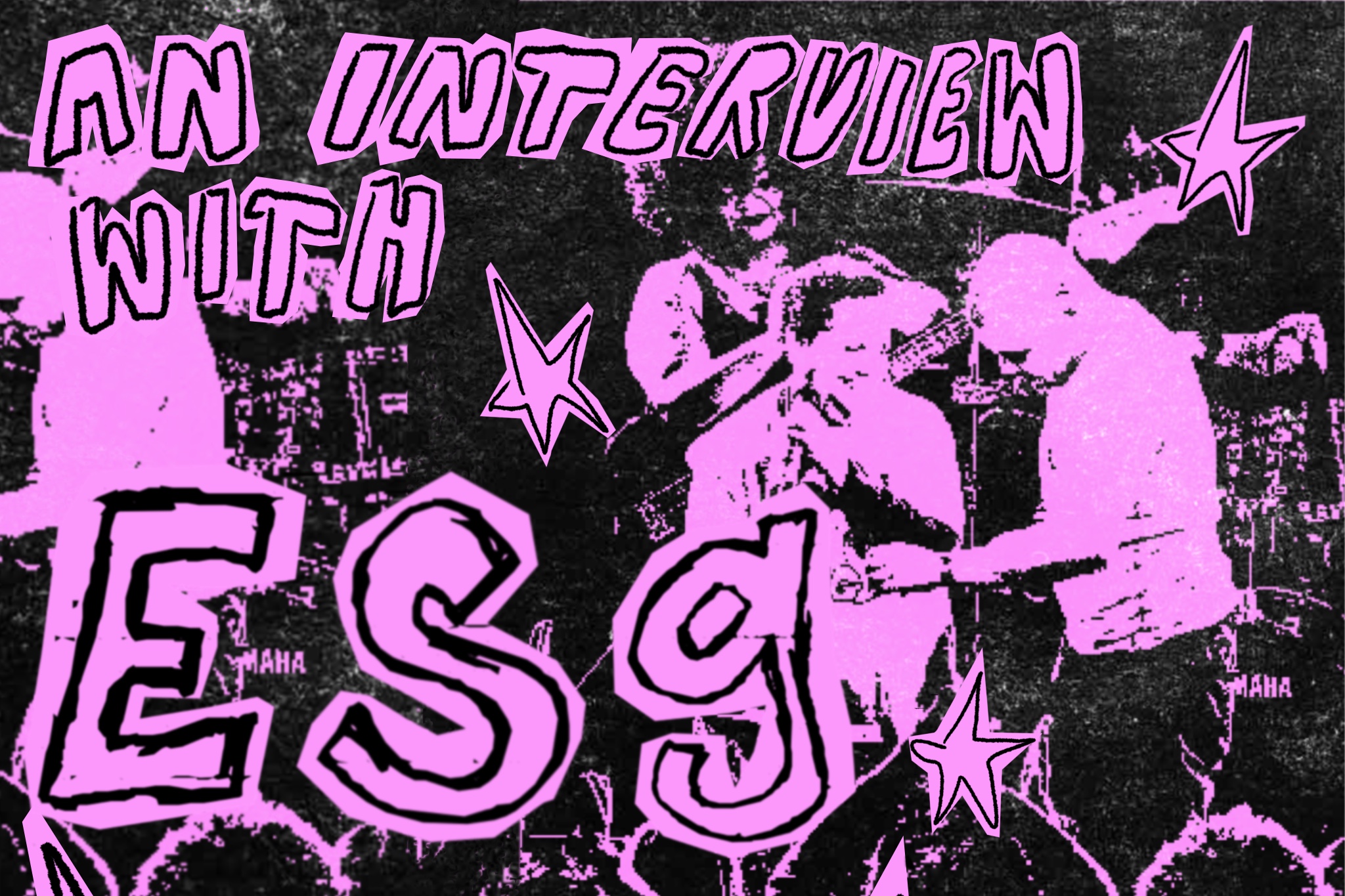
Graphic by Zee Slovenski
You’ve been titled as one of the most sampled bands in history, what is it like to hear your music being used by others?
Renee: When you create music, that’s not what you were expecting to hear. I can remember, in 1981 and we were in the club, and I saw a film with Afrika Bambaataa, and then I heard “UFO” in the back of the film, and I was like, “What’s going on here?” But [artists] are going to do it anyway. It’s not a matter of whether I like it or not, because the majority of the time I did not like it. It was a bunch of males being negative about women. Now they seem to use it in a more respectable manner.
Do you think that’s something that’s shifted in sampling? The attitudes or the way people sample you?
That’s what I’m saying. Now it’s not so much referring to women as bitches. Being sampled in music now is a dance thing. When you create a song, it’s your baby. You don’t want to lend your baby out! You wrote it for you, or for your work, or what you were feeling. It’s still not something I’m happy about.
Were people asking permission?
Now they have to get permission. When it first started, there were no sampling laws. When they started to go after the bigger artist’s music, then they created sampling laws. Now they have to get permission, or you can sue them.
Do you have any songs that sample ESG that you do enjoy?
Nothing I can think of offhand. [Sampling] was not its purpose. I can’t tell you there’s something that’s knocked me off my feet. Nothing’s better than the original.
It’s funny you talk about ESG as your baby, because it’s very much a family ordeal. In addition to your sisters starting the band, your children have now joined you as well. What has that been like?
They actually perform with me. I have my daughter Nicole on bass. My son Nicholas is on percussion, free dance, and that’s fun. We have various drummers. My sister Marie comes in and plays percussion sometimes.
When they were growing up, did you want them to follow in your footsteps and become musicians? Did you always have a family band in mind?
It just kind of happened. Life on the road is not what people think it is, running from airport to airport. Not knowing if the plane is going to take off. I’m coming from Georgia to New York, it’s gonna be cold. Hopefully everybody gets out and dances, because that’ll make people happy. As a family experience, it’s always joyous, because you get to connect through the music. You get to maybe say things or see them flourish. It’s a good thing. Every show is a unique experience, because we get there and we feel the energy of the crowd.
Was there any wisdom or advice that you had to impart on them as they entered the music world?
My mother said stay away from the drugs, drinking, and negative behavior. Know that you’re out there for the music. When we go to New York, we’re there for business. We’re not going to view the sites and things like that. We’re there to work. Put it in perspective that you’re here to do a job, and we’re not here for a sightseeing thing. Unless you have a day off or two. We went to Australia, and they wanted to be in front of the Sydney Opera House, so we did that. You actually see it in this documentary I worked on. It’s about ESG and our experience.
What was it like to reflect on your career like that?
In some cases, some things are painful. In 49 years, I faced racism, sexism. Currently, in some situations, I face ageism. But it’s never about my age. We still get out there and put on the show. The voice is still the same, and so I’ve dealt with being women in a male dominated arena and demanding respect.
Is it different now? Do you think you face less resistance now than you did then? Were there differences in New York then than now?
When we first came out, it was a really crazy, creative scene. When you would go out in the early 80s, each show was almost like a festival. You would get a lineup that was different. Today, lineups are generally based on if it’s a dance group. Then you get a lot of dance things. If it’s a rock thing, you get a lot of rock things, not a mixture. It’s like people think that they don’t want to hear another genre of music. And that’s why I love playing festivals, because you get all kinds of music. Now when we go out in New York, I think I get the respect that I wanted to get. Sometimes you go out there and get some promoters who still disrespect you. I don’t have time for it. Not at this age, not at this stage in the game, not knowing that I’ve done things to make it easier for women in this business. It’s interesting, like talking to Kathleen Hanna or Karen O or Robyn (I went on tour with her), and these people have told me how I’ve inspired their music. It was never something that we set out to do. I went and had fun. There wasn’t even a genre like alternative music at that time. It’s whatever you want it to be, but we’re going to make you dance.
Genres are interesting to think about. Do you feel genre/labels are for better or worse?
I say ESG is a punk funk dance band. We’ve been across all kinds of genres, from house music, we’ve had some rock artists sample music. The most interesting sample I’ve ever heard in my life was Queen sample “UFO.” I love Queen. Now that I think about it, that was a sample I liked. But it was even better when they paid up with their people.
It seemed like, at first, ESG also came very quickly into popularity and, like, positive reception. Did you feel like it was kind of like an overnight thing?
We met Ed Bahlman from 99 Records at a talent show. He called me. I said, “Oh, my God, we won the contest!” And he said, “Well, no…” But he became our unofficial manager. I don’t know if I would consider it overnight. He just threw us out there in the scene. I had no knowledge of the downtown scene, I thought this was just how it was so when they put us out there and we were accepted, no matter what kind of music was being played, it was cool.
Were there any female artists you and your sisters loved? Wanted to emulate?
In my house, it was James Brown. My mother loved James Brown. James Brown actually helped me create my writing source. When James Brown would take it to the bridge, he would take it to this bad-bone funk, and I said to my sisters, “What if we did songs that were just the bridge?” That’s how the writing process actually started. Later on, for me, it was Queen to B-52’s. My brothers listened to Jimi Hendrix and a lot of rock. My father got jazz; Sonny Rollins, Duke Ellington, Count Basie. We heard a lot of gospel. My mother sang in the church and made me sing at the church choir. And the Latin influence. We lived right by St Mary park in the back of the projects, and we would hear these Latin gentlemen every night, and they’d be out there with the congas and the timbales and claves. All kinds of influence all around us.
Was that your first introduction to music?
We were living in the projects. It was the early 70s. It was drug infested, so my older siblings got hooked on drugs. She made it her business to like, keep us away from that scene. So one Christmas, we got our instruments.
Just before wrapping up, I always like to ask if you have any advice to STATIC readers about anything?
For the young artists coming up, try to keep your masters in your publishing. As far as the world goes, we need to love each other and dance, because the rest of the stuff is bullshit. Let’s love each other and dance. Hopefully everything else will fall. We know what’s right.