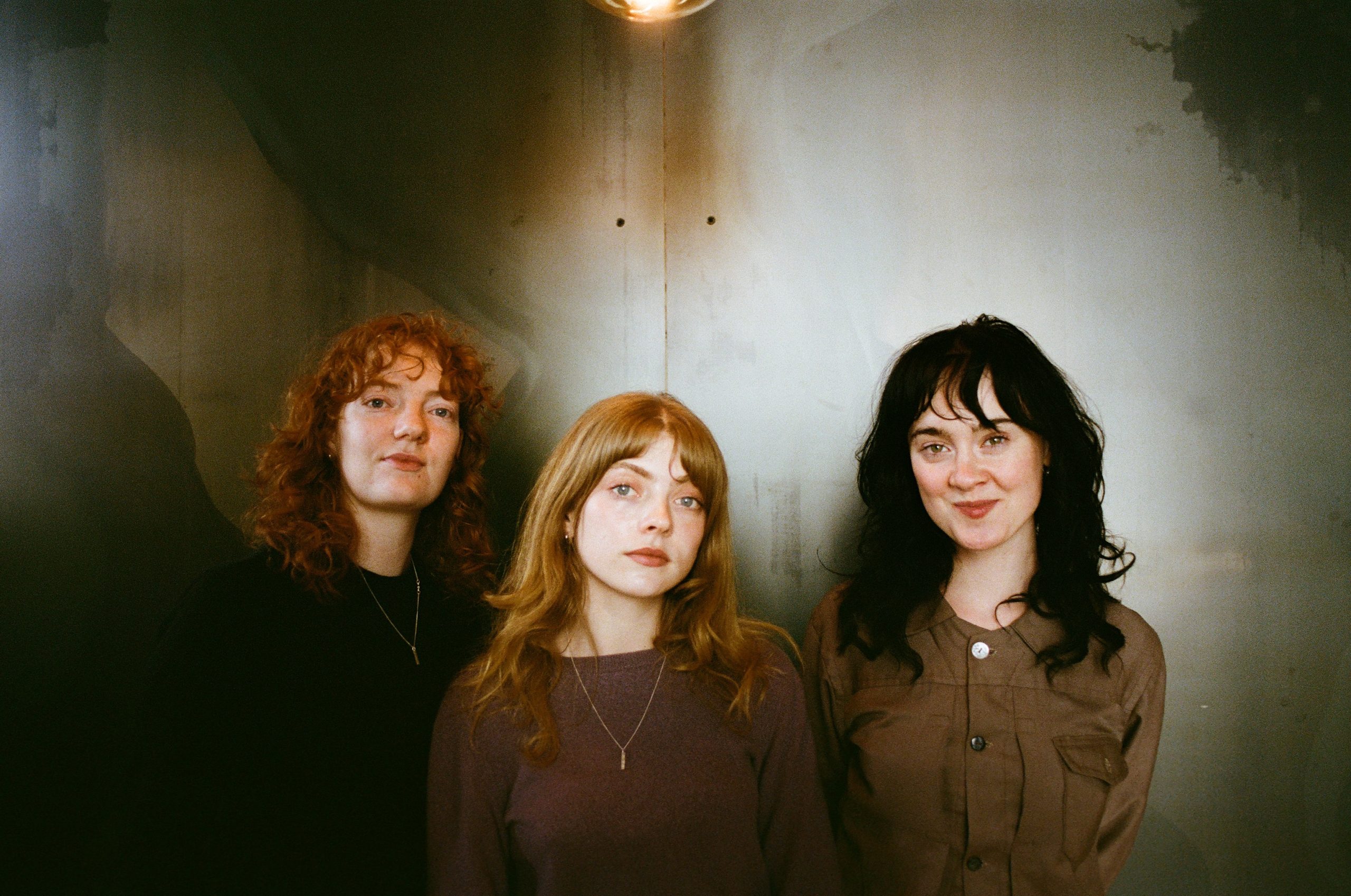
Good things come in threes, as is the case with Folk Bitch Trio. The band, made up of Heide Peverelle (they/them), Jeanie Pilkington (she/her), and Gracie Sinclair (she/her) knew pretty instantly after their first rehearsal, spent on Peverelle’s bed drinking Asahi and passing around a guitar, that they wanted to be a band.
What is so interesting about the trio is how seamlessly they weave their voices together in a perfect puzzle of unison all while remaining distinct in their harmonies. Each member stamps a personal marking on each song, whether it be in the writing or in the melody. Three differing points of view with a shared understanding.
Dark humor and sarcasm flows through their lyrics offering pinches of relief after poignant lyrics.“I’ll feel a certain type of way while writing a song, and it can end up feeling quite ridiculous and pathetic in retrospect,” says Pilkington. Their ability to poke fun at themselves quite sarcastically is a shared quality within each member that seems to be a strong thread that ties their work together.
This summer, the trio released their debut album, Now Would Be a Good Time, and they’ve just kicked off the North American leg of their tour. I sat down with them at their record label’s Brooklyn office on the first snowy day of the season.
Why did you choose “Sex on Fire” by Kings of Leon for your Triple J “Like a Version” Cover?
Gracie Sinclair: We joked that we would for forever. It’s a really great song.
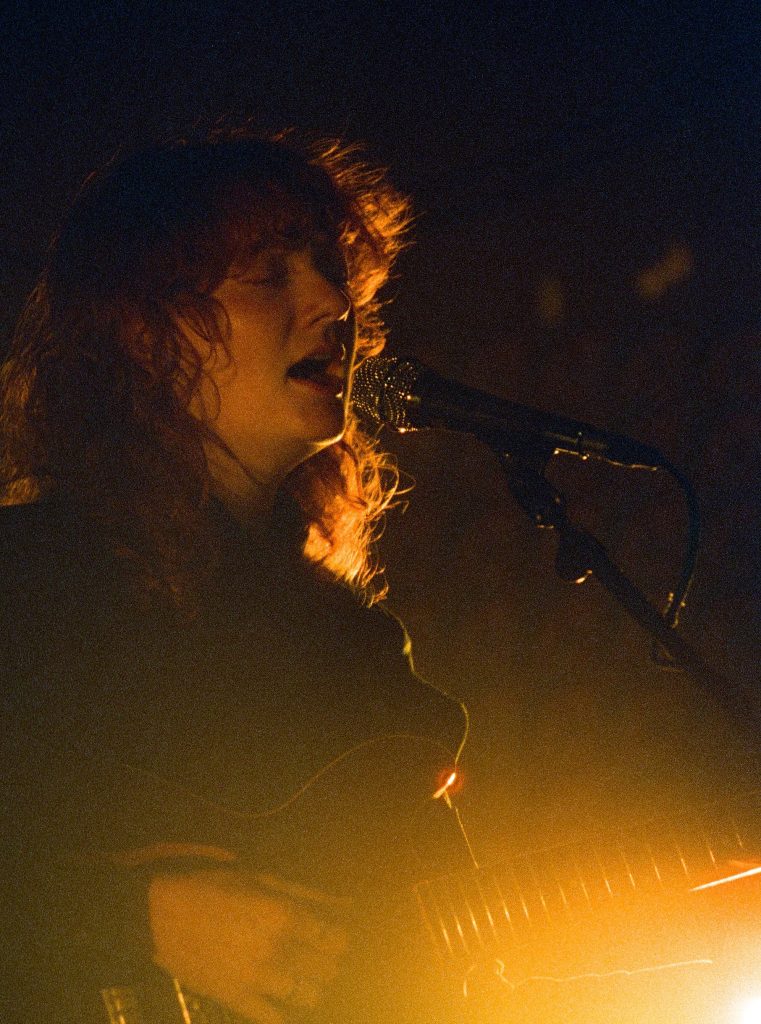
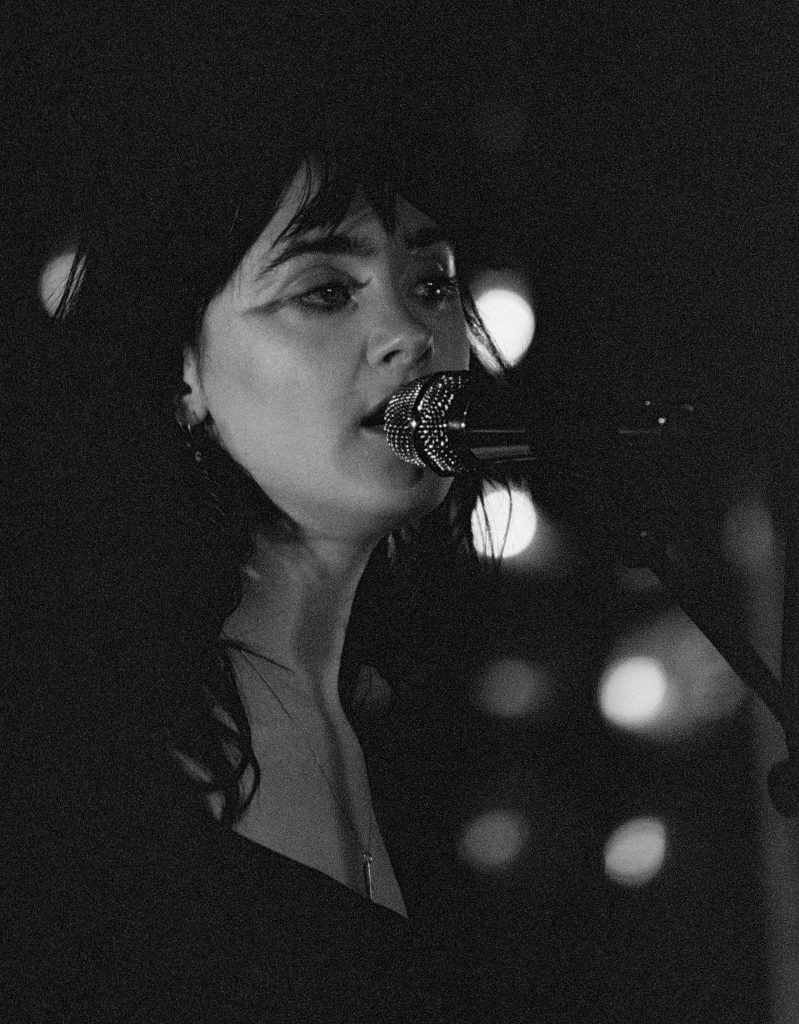
One thing I’ve noticed while watching you perform live is this intense connection. You make so much eye contact on stage and move in such unison. Can you describe that feeling?
Jeanie Pilkington: I feel like that’s just what it is on stage being with people you know really well. We have to lock in pretty hard.
Heide Pevrelle: It’s definitely noticeable when you watch a show and people aren’t looking at each other.
Do you feel like you need to make eye contact in order to reach all the beats of the song?
GS: I feel like since we’ve been touring these songs for so long I could do this set with my eyes closed. 100% I could do it with my eyes closed. I just look at you guys to catch the vibe…make sure the vibes are alright.
JP: It’s kind of for fun. We’ll wink at each other. It’s not like fucking with each other but it’s like ha ha!
What’s your favorite song to perform lately?
GS: Changes all the time. I really like playing “Sarah” though recently.
JP: Yeah that one is fun.
HP: I like playing Foreign Bird. It brings the drama and it’s got different elements to it.
I feel like oftentimes when three different harmonies are layered, it can create more anonymity and make things feel less intimate. But with you guys, it still feels very personal and you each have such personal touches on each track. How do you achieve this?
JP: It’s honestly not really something we have control over. It’s just how it sounds when we sing together. We put a lot of effort into our arrangements and make sure they convey what we want them to. We all just have control over our own voice and how it sounds when we sing together.
GS: We make an effort to blend.
HP: But it kind of happens naturally.
GS: Yeah. And we’re not trying to blend like a classical trio. If you hear traditional Latin music where it’s a three-part scene. That’s a perfect blend, and we are not trying to do that. Or like the Dolly Parton trio… where it’s three cowgirls, three superstars in their own right not making much compromise. We definitely want to have a beautiful blend…but not to that extent.
What does “folk” mean to you?
JP: (Laughing) Storytelling!
GS: Yeah I mean that’s probably what it means to me more than anything. The style of poetic songwriting.
Do you ever feel confined to “folk”?
GS: No.
HP: I think people like to confine us to folk because of our name. But we don’t feel confined to it.
JP: We haven’t really been making folk music.
GS: Yeah… but we do in a sense.
JP: Yeah we do but that’s dependent on what each listener’s relationship with folk is. To some people we are unequivocally making folk music. But to us…we’re not necessarily making folk music.
HP: We are definitely not folk music to a trad folk listener.
GS: Yeah when we have a rhythm section it’s like a “rock band”.
Do any of you have a distinct memory when you first started playing together or like yes this works we should be a band!, or was it more gradual?
HP: We actually filmed one of our first rehearsals on a MiniDV camera. And I recorded it onto a cassette tape as well.
GS: It’s so cute. It’s just us sitting in bed with guitars drinking Asahi.
HP: It was pretty instant.
What’s everyone’s favorite thing that the other two members of the trio contributed to the record?
GS: Heide and Jeanie did most of the guitar playing so that might be my favorite thing.
JP: My favorite thing that Heide contributed was the major pentatonic synth playing at the end of Sarah.
HP: My favorite thing Gracie contributed was the slide playing. There was a resonated guitar that Gracie played on “That’s All She Wrote”.
GS: I do remember being like I’m gonna pick up the slide.
JP: Yeah that’s also my favorite thing you contributed Gracie.
HP: I mean both of you just…brought it. There’s a lot of emotional energy that goes into making a record, and it was hard at points. I think us just showing up every day was special.
What were the hard points?
HP: We were living together in an Airbnb in Auckland, New Zealand going to the studio every day and not having any kind of outside world input.
GS: No friends except each other.
HP: Yeah. And all living through our own personal stuff while also making a record. It got pretty exhausting at points while also being really liberating and fun. Our producer made it really fun.
Why the title, Now Would Be A Good Time, for the record?
HP: We thought “Now would be a good time to put out a debut record”. It’s also a line in “Foreign Bird” and when Jeanie suggested the title we all thought it was perfect.
What part of your lives do you pull from for lyrical inspiration?
GS: I write a lot about my present relationships and childhood.
JP: I think we all just write a lot about ourselves. Songwriting is so self-indulgent. Even if you’re writing about a breakup you’re writing about your psyche and inner monologue.
GS: I find it powerful though being honest about both the ugly and pretty parts of your psyche. I think the closer to the source you can get, the closer you can tap into being relatable to someone else.
HP: I write a lot about the past.
I love the story behind the song “The Actor” [a song Peverelle wrote about the demise of their relationship at their ex-partner’s solo play]. What was it like coming out with that? Awkward? Honest?
HP: Yeah it was a bit awkward.
GS: No it wasn’t
JP: You can’t submit yourself to awkwardness. You have to be owning what you’re putting out into the world.
HP: I think the person who it’s about gets it because they’re an artist too. All music you listen to listen to…you end up making it about yourself anyway. You sign your experience to the artist’s experience when listening to a record. So yeah I take it back. It wasn’t awkward.
GS: People always ask about that song but all of our songs are quite pointed.
Do you guys draw on any poets or musicians in particular for lyrical inspiration?
GS: Oh I love stealing. I think that’s a really fun thing to do: let the lyrics of the music you listen to creep into your own music.
HP: That’s how people have always done it.
GS: I like how Jeff Tweedy said he would just pull out books and look at words or titles. And I do that too! I will be sitting in my bedroom songwriting and I’ll look around my room and pick up words from titles of books on my shelves.
HP: I steal things from my friends all the time.
JP: Yeah you have to. Your perspective is so restricted if you don’t steal.
HP: Even Jeff Tweedy said that it’s not about the lyrics it’s about the melody. He’ll do the melody first, and then fill in the words. Which is cool because his melodies are awesome and I’m often really taken by his lyrics.
I also noticed a lot of religious imagery throughout the album. Especially in “Gods A Different Sword”. What’s the story behind that?
HP: Honestly nothing. None of us grew up in any religious background.
JP: We’re all agnostic.
GS: Our town isn’t really undercut by any religion at all. I think we’re all really fascinated by religion. And perhaps we’re all quite spiritual.
HP: Yeah but I don’t know where “Gods A Different Sword” came from, it just sort of happened. But it’s funny we do talk about religion quite a lot in our songs. And I forget who we were talking to but someone recently told us that it’s quite obvious that we didn’t grow up around religion. We’re just interested in religion.
What interests you about religion?
GS: I love most different types of religion and the artifacts involved. Just the idea of The Bible and the fact that there’s this whole story that so much of the world is bound to. I’m drawn to all the theater, imagery, and devotion. Tapping into creativity is like reaching for something higher to me. And God gives out a name that people pray and talk to. I’m not talking to a God but I’m looking for guidance.
HP: It’s a pretty privileged thing to be able to dip in and out of religion in that way and cherry pick what you want and not deal with any of the consequences.
I feel like your music is very earnest, but you also aren’t afraid to poke fun at yourselves in the lyrics. How do you find this balance?
JP: I think we are very aware that the things we write about are not tragedies. But writing about it doesn’t always stop it from feeling like a tragedy. I’ll feel a certain type of way writing a song, and it can end up feeling quite ridiculous and pathetic in retrospect.
HP: We’re very sarcastic and dry and all share a similar omnipresent sense of humor that you have to have if you’re going to concern yourself with writing music that people are going to interpret as quite serious.
Where do you see yourselves in the future?
GS: I think we see ourselves in a lot of different places in the future. On the road…on the stage…writing on a beach in Spain. The last 18 months have been pretty major for us so we are pretty excited.